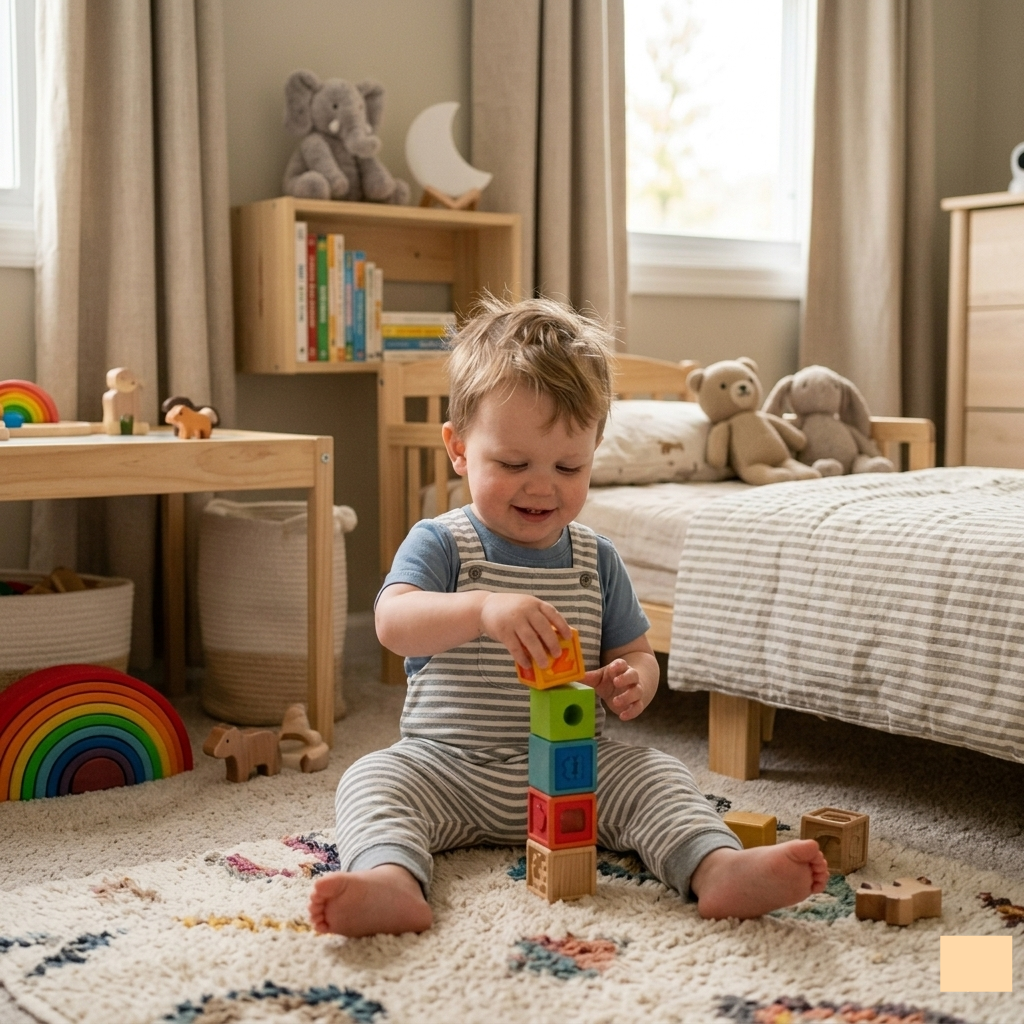
I’ll be honest with you — I had no idea what Montessori actually was until my son was about 18 months old and I was completely losing my mind.
Every single day felt like a battle. He wanted to touch everything, pull everything off shelves, pour water on the floor, and basically dismantle our entire living room while I chased after him like a frazzled security guard.
Sound familiar?
A friend suggested I look into Montessori, and I remember thinking it was one of those fancy, expensive school things that definitely wasn’t for us. But then I actually started reading about it, and I had one of those oh. OH. moments.
The whole point of Montessori is to let toddlers do exactly what they’re already trying to do — touch, explore, pour, sort, build — but in a way that’s intentional. Purposeful. Safe.
We didn’t buy a single fancy toy. We started with stuff from our kitchen drawer. And honestly? It changed everything.
So if you’re in that phase where your 2 year old is climbing the walls and you’re just trying to get through the day — this post is for you.
What Is Montessori, Really? (The Short Version)
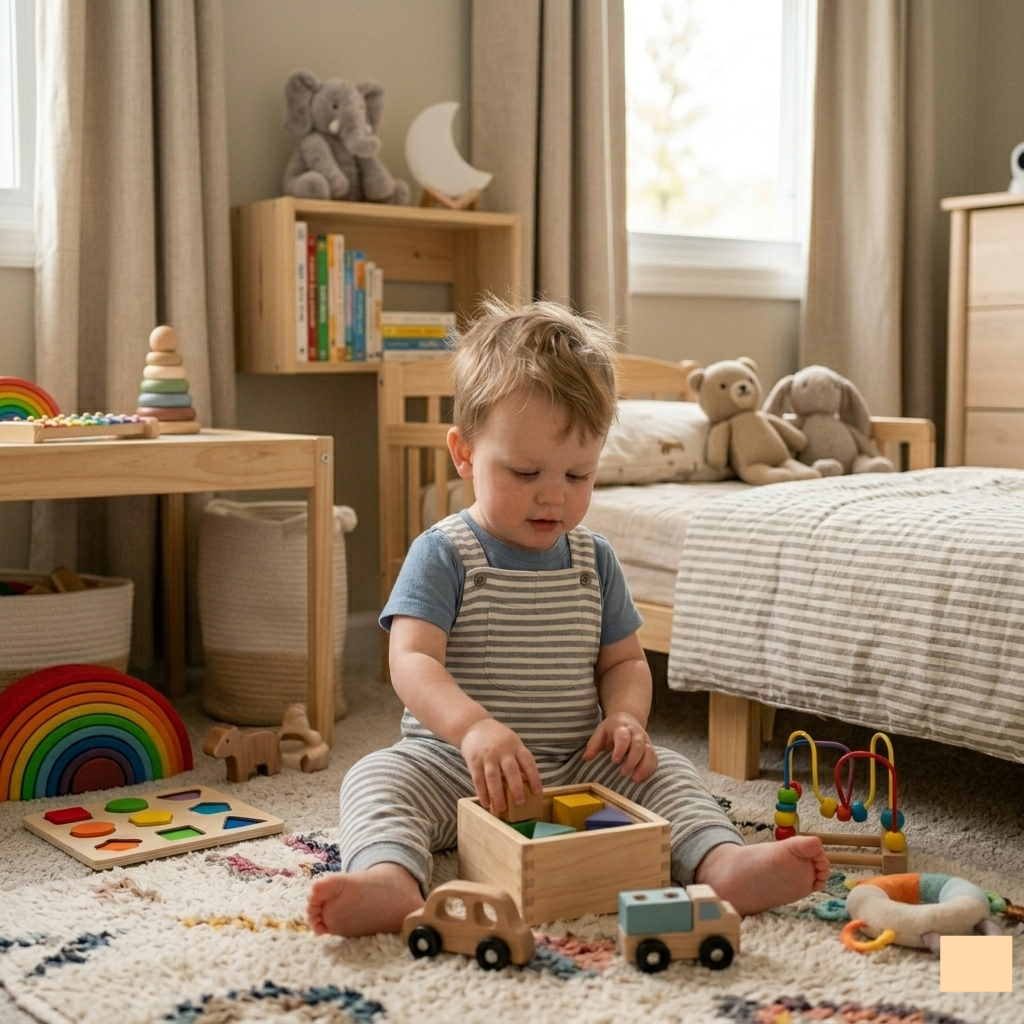
Before we get into the activities, let me give you the two-minute version so it actually makes sense.
Montessori is a child-led approach to learning developed by Dr. Maria Montessori over 100 years ago. The core idea is simple: children learn best when they’re allowed to do things themselves, at their own pace, with real materials.
That means instead of handing your 2 year old a screen or a battery-powered toy, you give them a bowl of water and a sponge. Instead of doing everything for them, you step back and let them try.
Two year olds are in what Montessori calls a “sensitive period” — a window where their brains are wired to absorb specific skills. At this age, those are: movement, language, order, and sensory exploration. Every activity in this list taps into at least one of those.
The best part? You don’t need to overhaul your house or spend hundreds of dollars. Most of this stuff is already in your home.
Why Montessori Works So Well for 2 Year Olds Specifically
Here’s something nobody tells you: 2 year olds are not trying to drive you crazy on purpose. They’re genuinely, desperately trying to be competent.
When my son had a meltdown because I poured his juice for him, I thought he was being dramatic. But he genuinely wanted to do it himself. That urge to be independent isn’t defiance — it’s development.
Montessori works for this age because it meets that urge head-on. Instead of constantly saying “don’t touch that” or “let me do it,” you’re setting up activities that say yes — here, do this. Do it yourself. You’re capable.
The results we saw were pretty quick:
- Fewer tantrums (because he felt more in control)
- Longer independent play stretches
- Way more confidence
And I got to actually drink my coffee while it was still hot. That alone was worth it.
15 Montessori Activities for 2 Year Olds (That We’ve Actually Done)
I’m not going to list 47 activities you’ll pin and never try. These are the ones we actually did, that actually worked, with stuff we actually had.
1. 🌊 Water Pouring
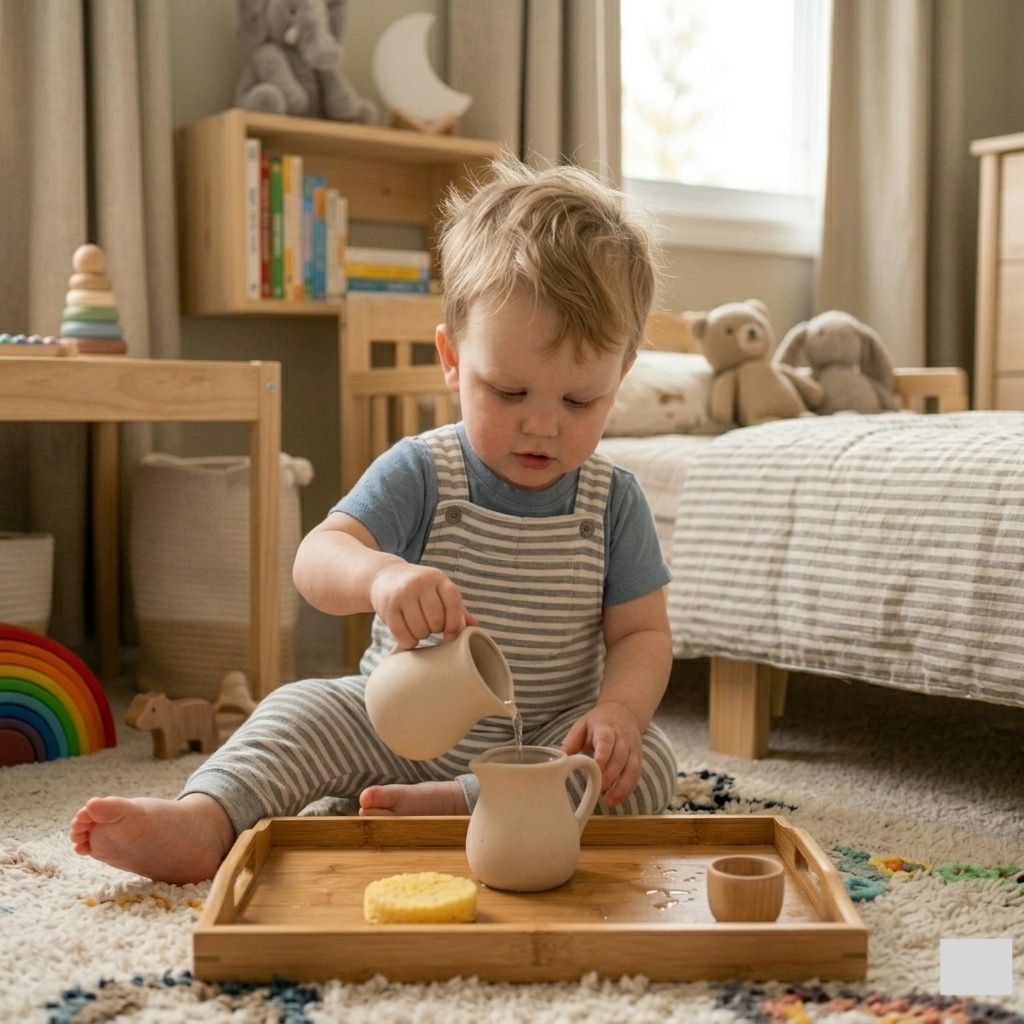
What you need: Two small pitchers or cups, a tray, a sponge
This was the very first one we tried and it immediately became my son’s obsession. Fill one small pitcher with a little water. Let them pour it into the empty one. Then pour it back. Repeat forever.
It builds concentration, fine motor control, and hand-eye coordination. And yes, they will spill. That’s what the tray and sponge are for — and cleaning up the spill is part of the activity.
We eventually got him this mini stainless steel Montessori pitcher and it was such a good buy — the size is perfect for little hands and it’s weighted just right so it doesn’t tip over too easily. But truly, two plastic cups work just as well to start.
Pro tip: Start with dry pouring first (dried beans or rice) before moving to water. Much less laundry.
2. 🧽 Sponge Squeezing
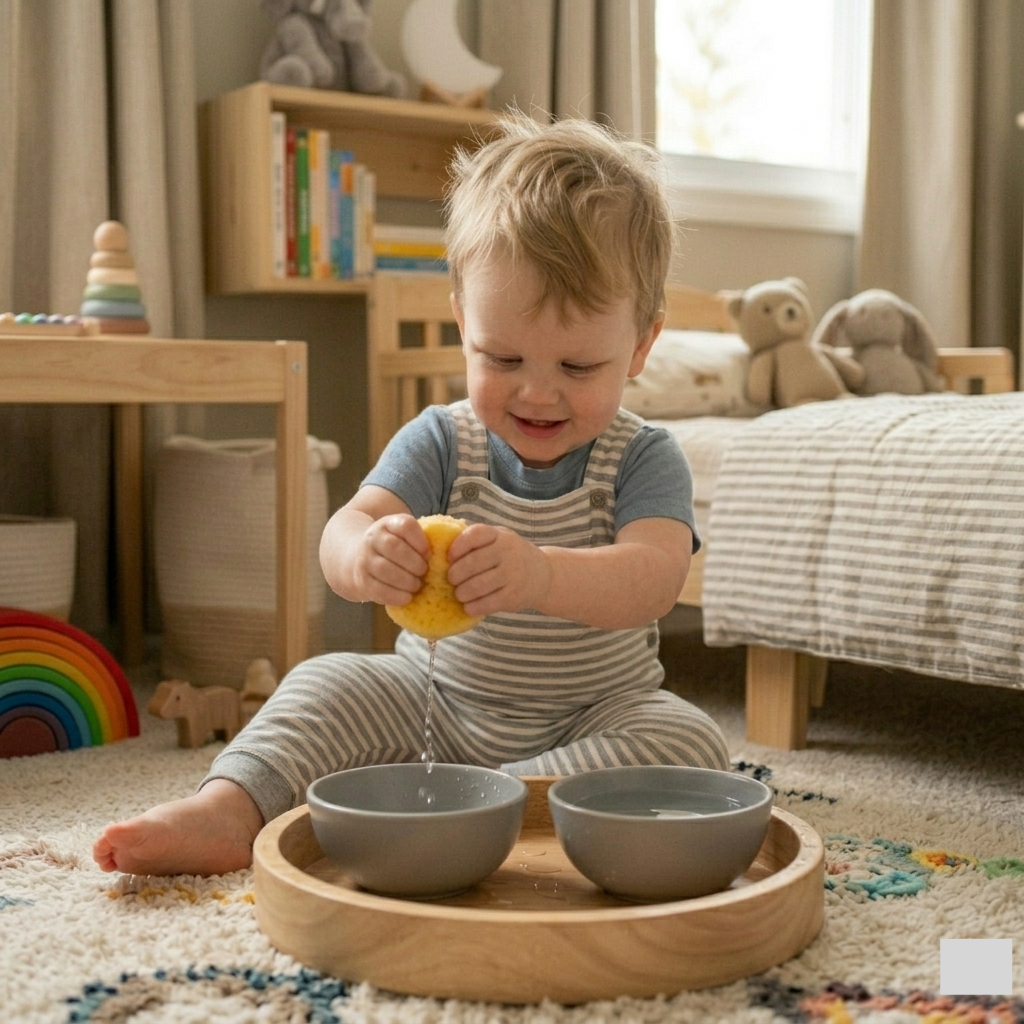
What you need: Two bowls, a sponge, water
Fill one bowl with water. Task: move all the water to the empty bowl using only the sponge.
My son did this for 25 minutes straight one afternoon. 25 minutes. I did not know that was physically possible for a 2 year old.
It’s excellent for hand strength (which directly supports writing later on) and it’s deeply satisfying for them in a way I can’t fully explain but completely understand. A regular kitchen sponge cut in half is the perfect size for toddler hands.
3. 🥄 Spooning and Transferring
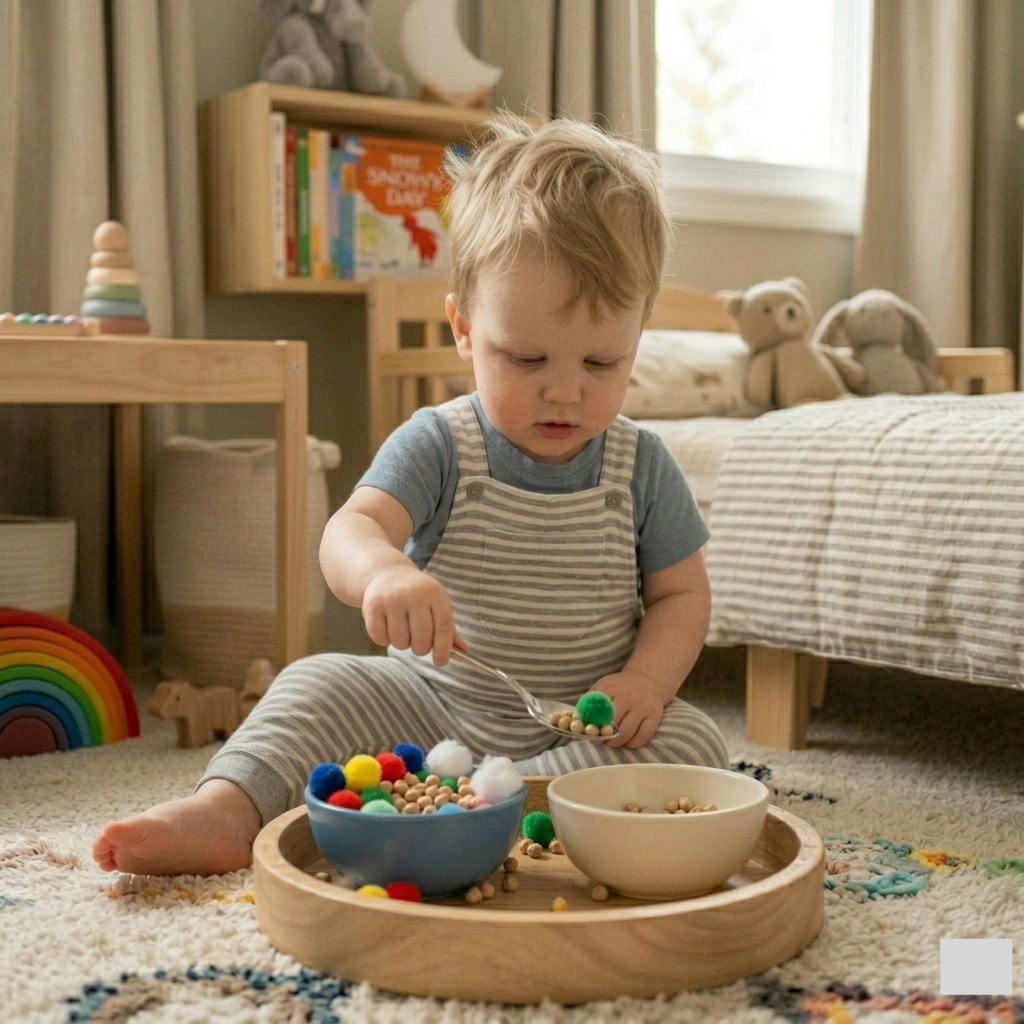
What you need: Two bowls, a spoon, pom poms / dried chickpeas / cotton balls
Put the objects in one bowl. Spoon them one by one into the empty bowl. That’s it.
This sounds boring. It is not boring to a 2 year old. Start with a big spoon and large objects, then gradually go smaller as they get more precise.
If you want a proper set with the right-sized wooden scoops and tongs made for toddler hands, this sensory bin tools set is exactly what I’d recommend — it comes with scoops, tongs, and cups, all wooden and sized perfectly for little fingers.
4. 🔒 Busy Board (Locks, Latches, Zippers)
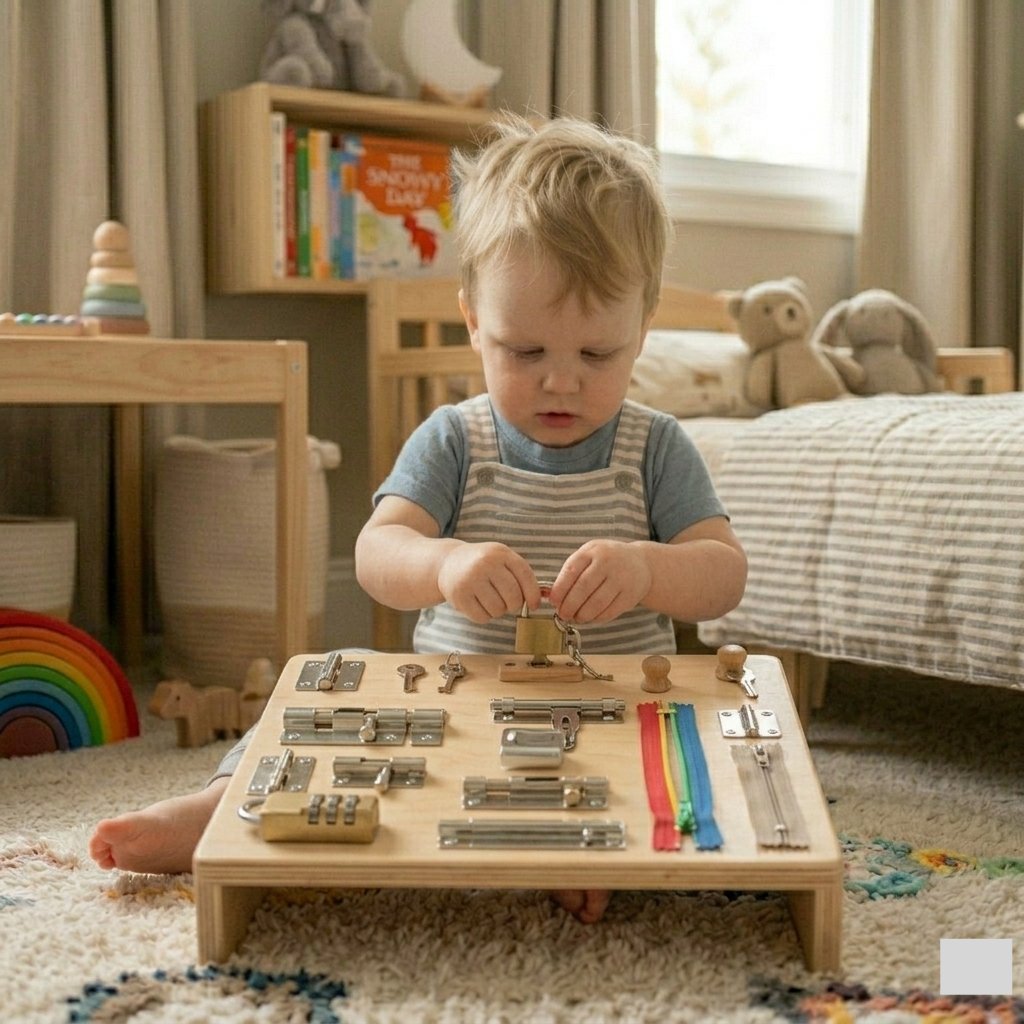
What you need: A busy board OR a cardboard box with a simple clasp
Opening and closing things is huge for 2 year olds. Cabinet latches, zip pouches, velcro flaps, snap buttons — collect a few different ones and let them work through them.
We had a little fabric activity book with zippers, buttons, and snaps that my son would sit with quietly for a surprisingly long time. But when I found this wooden Montessori busy board, it quickly became his most-reached-for thing. It has latches, a lock and key, zippers, snaps — all in one place. And it directly translated into him learning to get dressed faster. Win-win.
5. 🌿 Tearing Paper
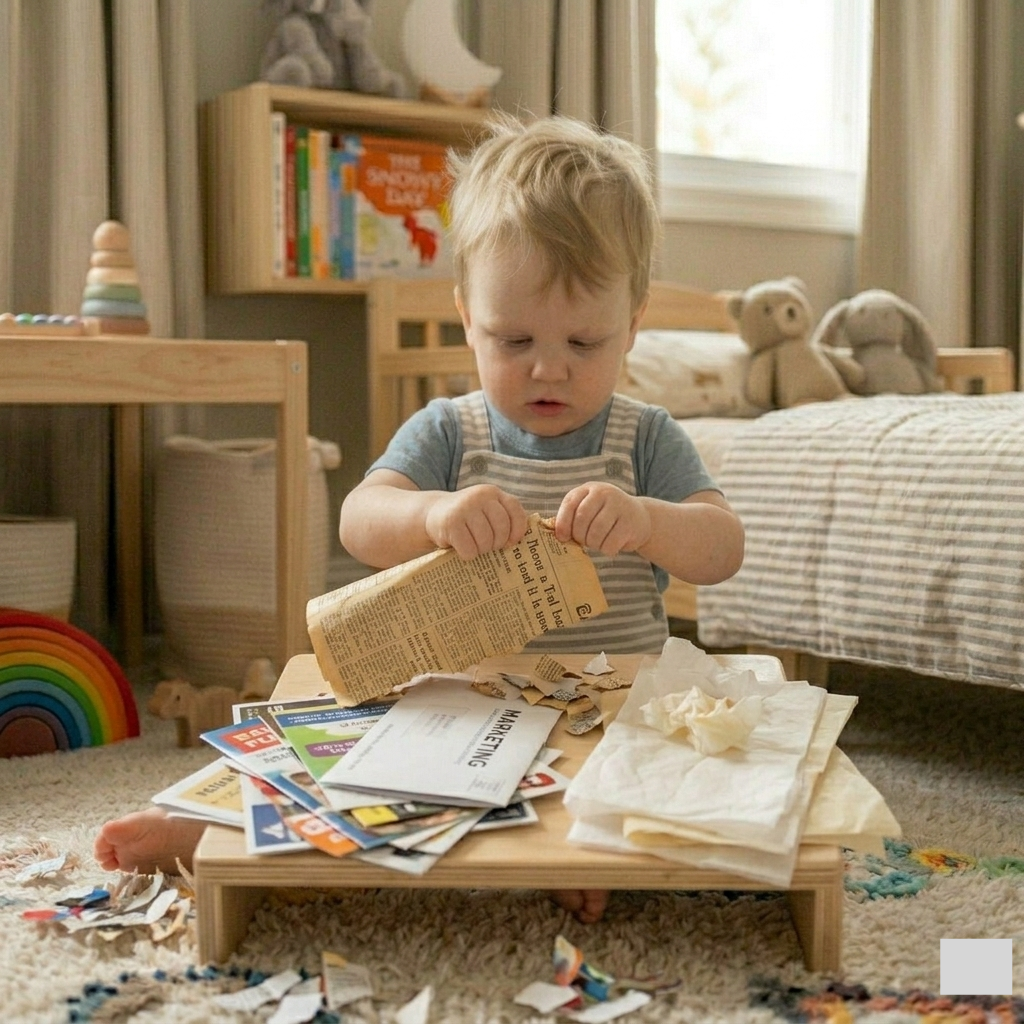
What you need: Old newspaper, junk mail, tissue paper
Yep. Just let them tear paper. Tear it into tiny pieces. Then (if you want to extend the activity) put the pieces in a bag to use for a collage later.
Tearing strengthens the muscles in the hands and fingers. It’s also genuinely satisfying — even I tore some paper that day. No regrets.
6. 🖌️ Painting with Water
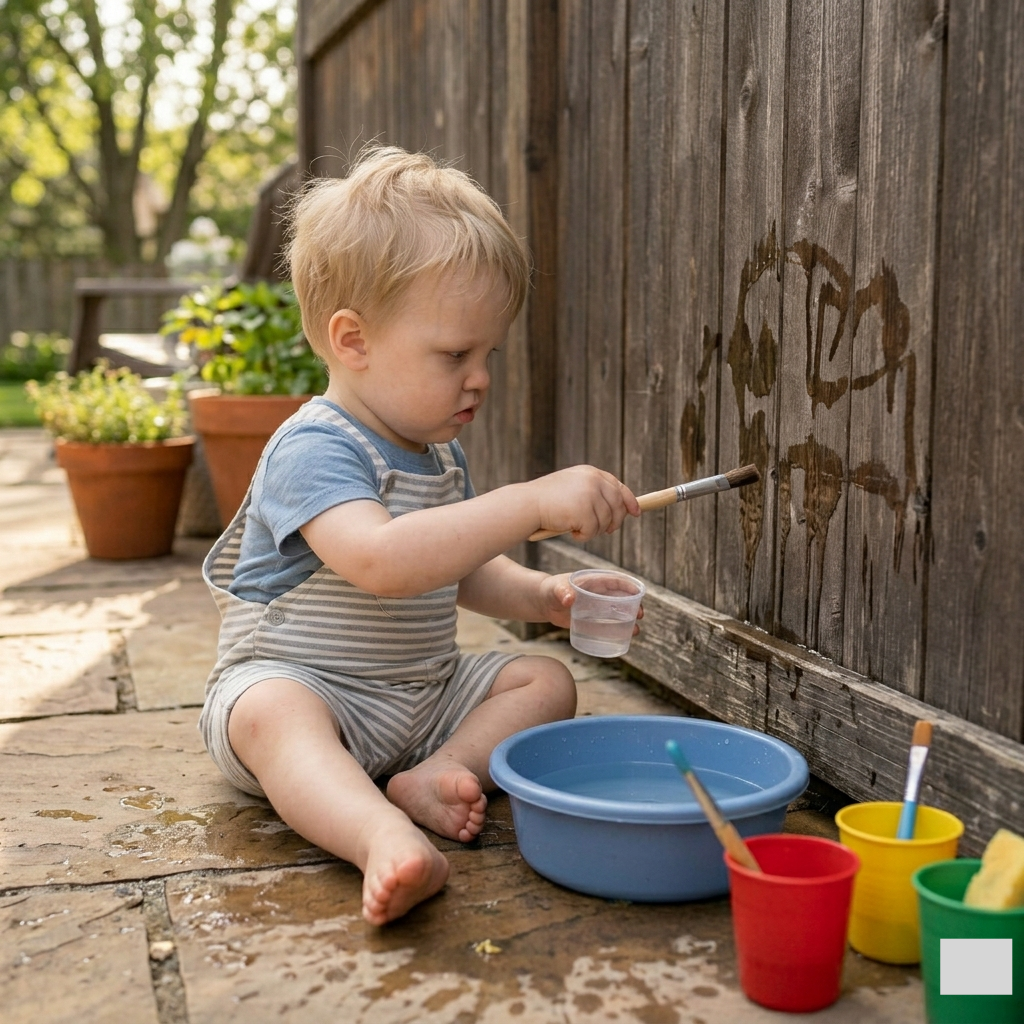
What you need: A paintbrush, a cup of water, a fence or patio stones
Take them outside, hand them a wide paintbrush and a cup of water, and let them “paint” the fence, the pavement, or the garden wall.
No mess. No stained clothes. No cleanup. Just a completely absorbed toddler doing something that feels important and big.
This was a summer staple for us. On days when I was exhausted and just needed 20 minutes, it saved me every single time.
7. 🧱 Stacking and Sorting by Color
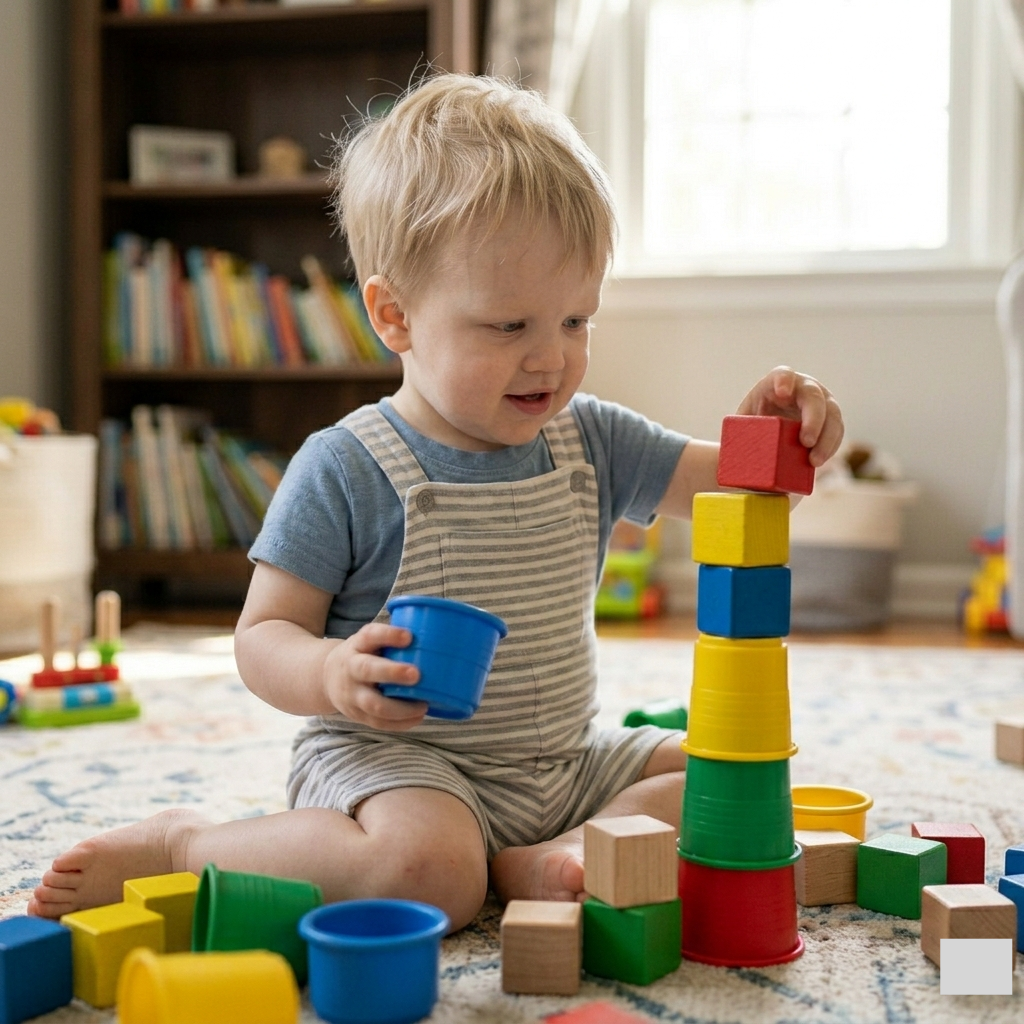
What you need: Colored blocks, cups, or even toilet roll tubes painted different colors
Two year olds are in a sensitive period for order, which means sorting activities are almost magnetically appealing to them.
Set out objects in three or four colors and put a matching colored container next to each pile. Let them sort. My son would re-sort the same items multiple times in a row, getting visibly proud of himself each time he finished.
8. 🌾 Sensory Bins
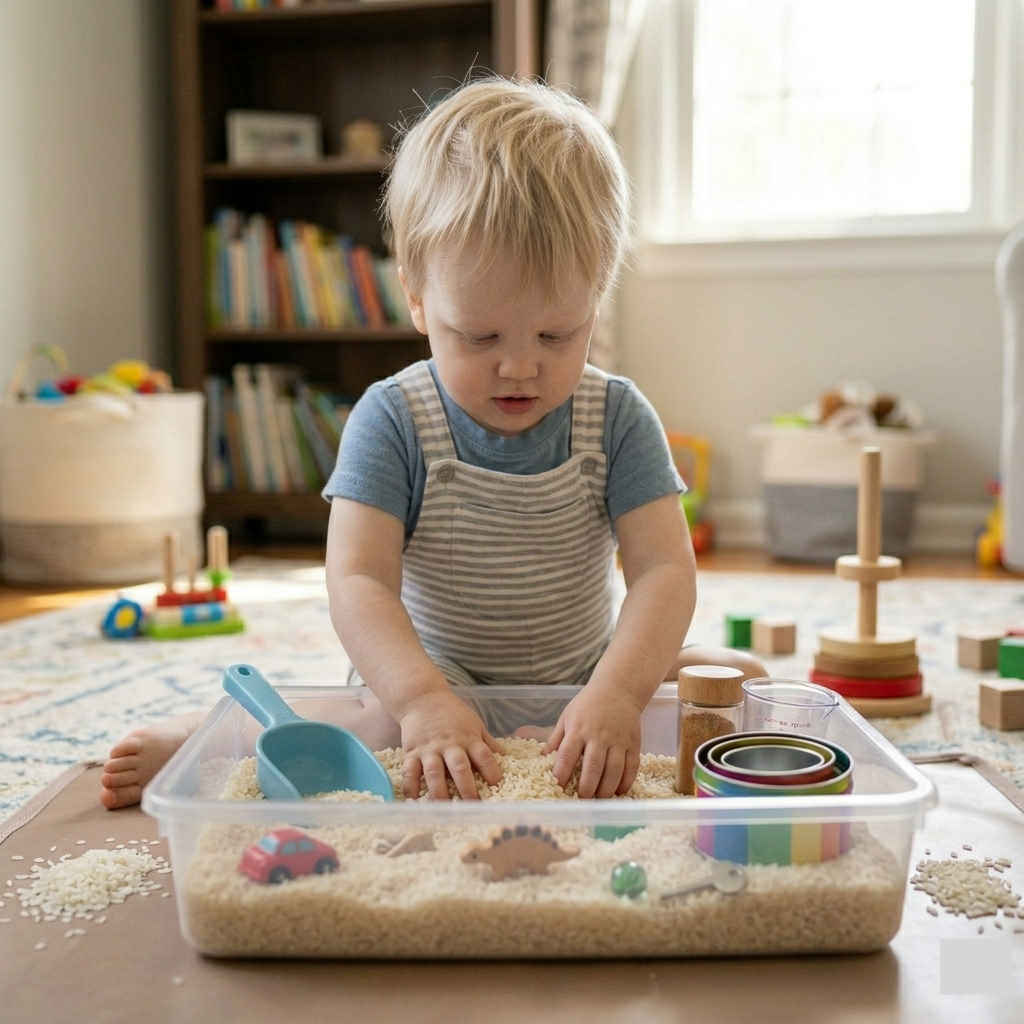
What you need: A storage bin + a “base” material + a few scoops/tools
This is a classic for a reason. Fill a bin with a base — dried rice, kinetic sand, dried pasta, dried lentils — and hide a few small objects inside. Add scoops, cups, and small containers.
We themed ours seasonally. In autumn we did dried corn and small gourds. Around the holidays we did dried rice with little wooden shapes hidden inside.
For the tools, I love this wooden sensory bin set — it has scoops, tongs, and little dishes that make the whole setup feel intentional. But honestly, a spoon and a cup from your kitchen works great too.
Important: Supervise closely with anything small if your toddler still mouths objects.
9. 🪣 Washing Vegetables
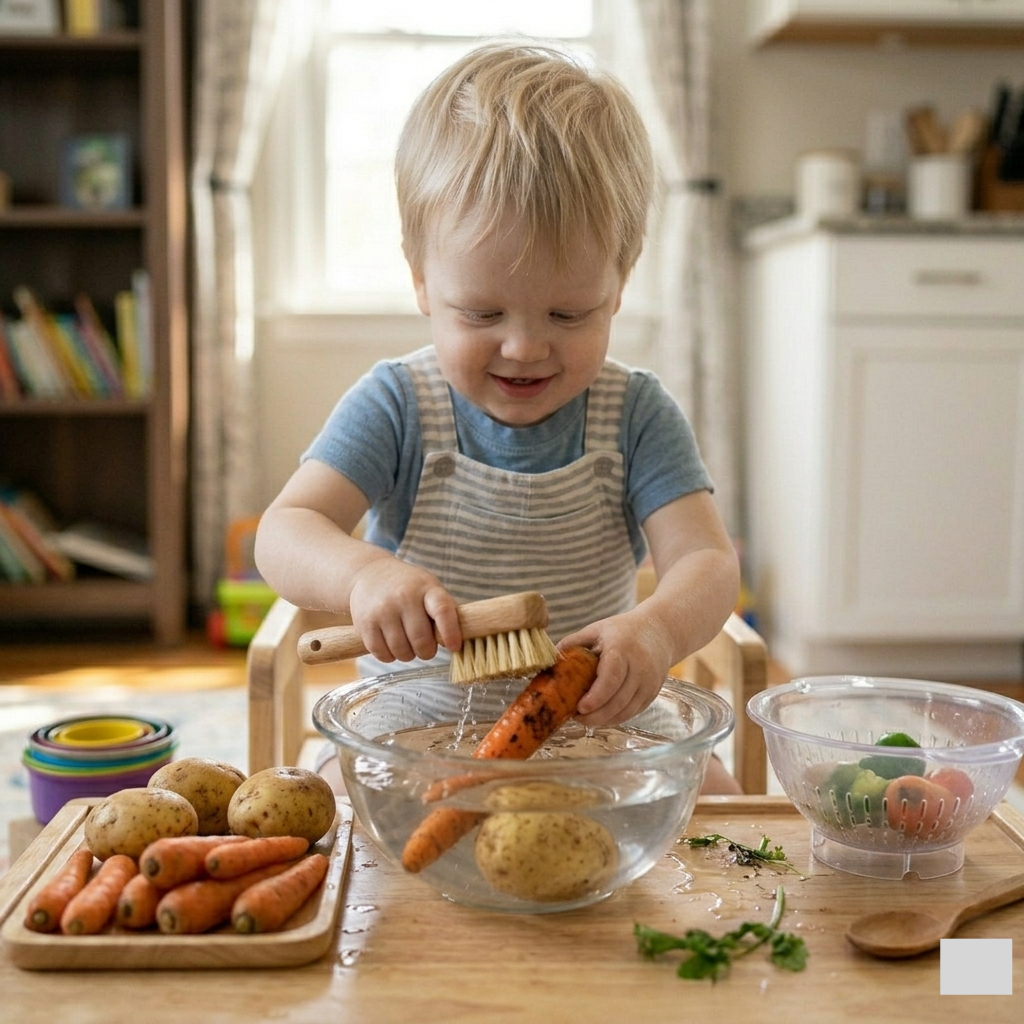
What you need: A bowl of water, a small scrubbing brush, a vegetable (we used potatoes and carrots)
Before I cook, I now hand my son a couple of vegetables and a little scrubbing brush over a bowl of water. He washes them while I prep everything else.
This is a real life skill. It’s purposeful work, not pretend play. And that matters enormously to toddlers — they want to contribute to real things.
The pride on his face when I thanked him genuinely, used the carrots he washed in our dinner, and told him he helped make the soup… he talked about it for days.
10. 🌀 Threading Beads or Pasta
What you need: Large wooden beads + thick lace OR dried penne pasta + pipe cleaner
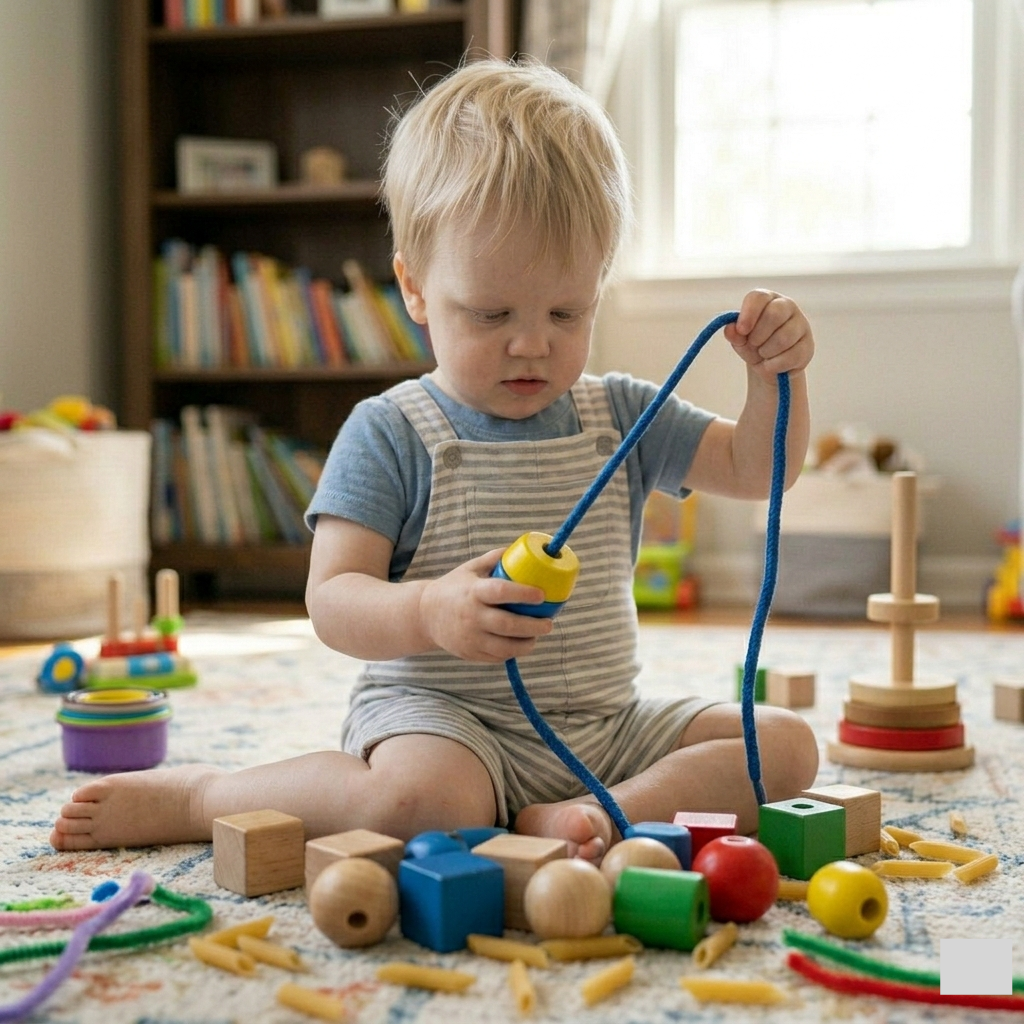
Thread the bead or pasta onto the lace or pipe cleaner. Simple. Focus-building. And deeply satisfying when the string fills up.
Start with pipe cleaners because they’re stiff and much easier for small hands to control. Once they’ve mastered that, move to laces.
We use these wooden threading beads — they come in fun animal and vegetable shapes which adds a little extra delight, and the wooden “needle” on the lace makes it much easier for beginners than flopping string alone.
11. 🧴 Squeezing a Dropper
What you need: A medicine dropper (or turkey baster), small cups, water, optional food coloring
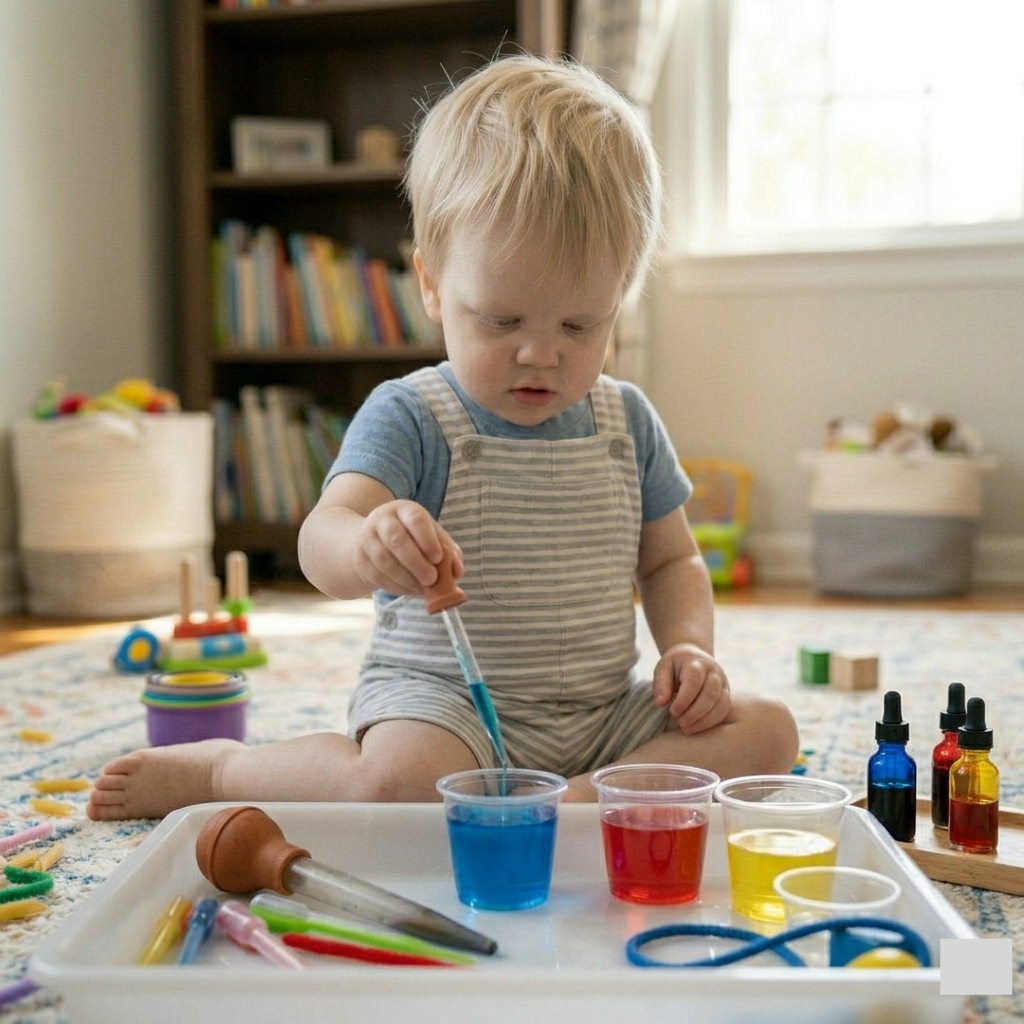
Fill cups with colored water. Use the dropper to transfer water from one cup to another.
The concentration required to squeeze a dropper slowly is remarkable. And when you add two or three colors, mixing them becomes a whole discovery moment. We accidentally made the world’s ugliest brown on our first try and my son was absolutely delighted.
12. 🌱 Planting Seeds
What you need: A small pot, soil, seeds (beans are best — they sprout fast)
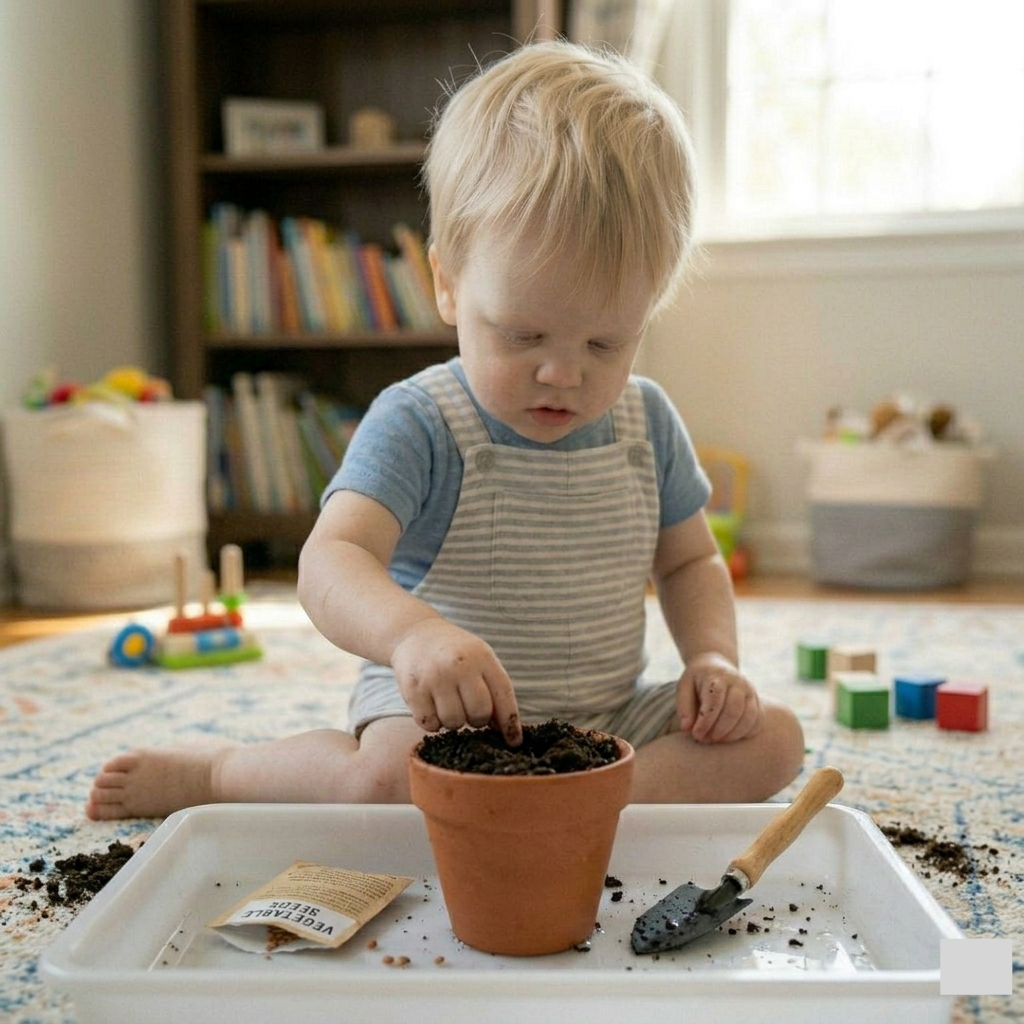
We planted beans in small cups on the kitchen windowsill. My son was responsible for watering them every morning with a small watering can.
Watching something grow that you planted is a powerful experience for a little person. And the daily routine of checking and watering built a real sense of responsibility. When those first little green shoots appeared, the look on his face was one of my favourite parenting memories.
13. 📚 Book Basket (Rotate Weekly)
What you need: A low basket, 5-6 books
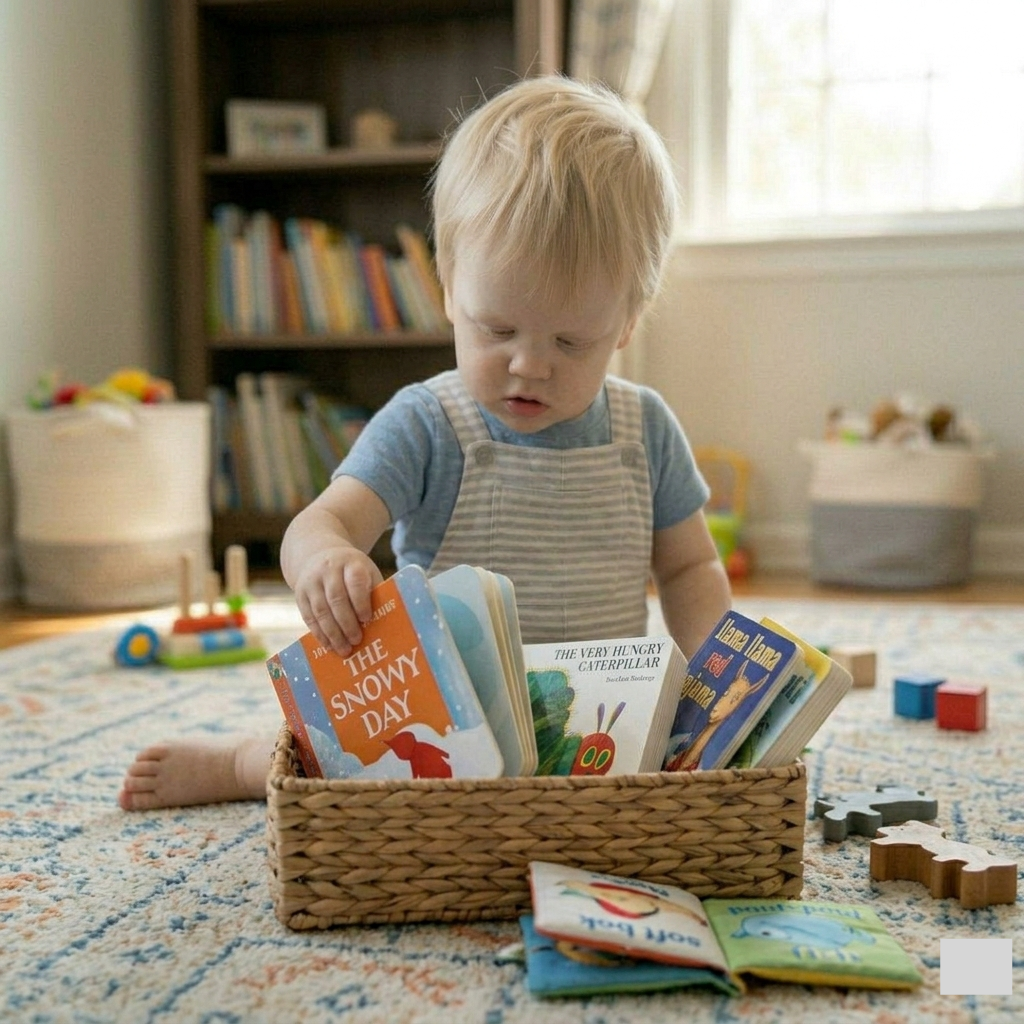
This is less an “activity” and more an environment setup. Put a small basket of books at toddler height and rotate them weekly so there’s always something fresh.
A 2 year old who can access books independently and choose what to look at will spend far longer with them than a child handed a book by an adult. It sounds tiny but it genuinely makes a difference.
14. 🧹 Sweeping
What you need: A child-sized dustpan and brush
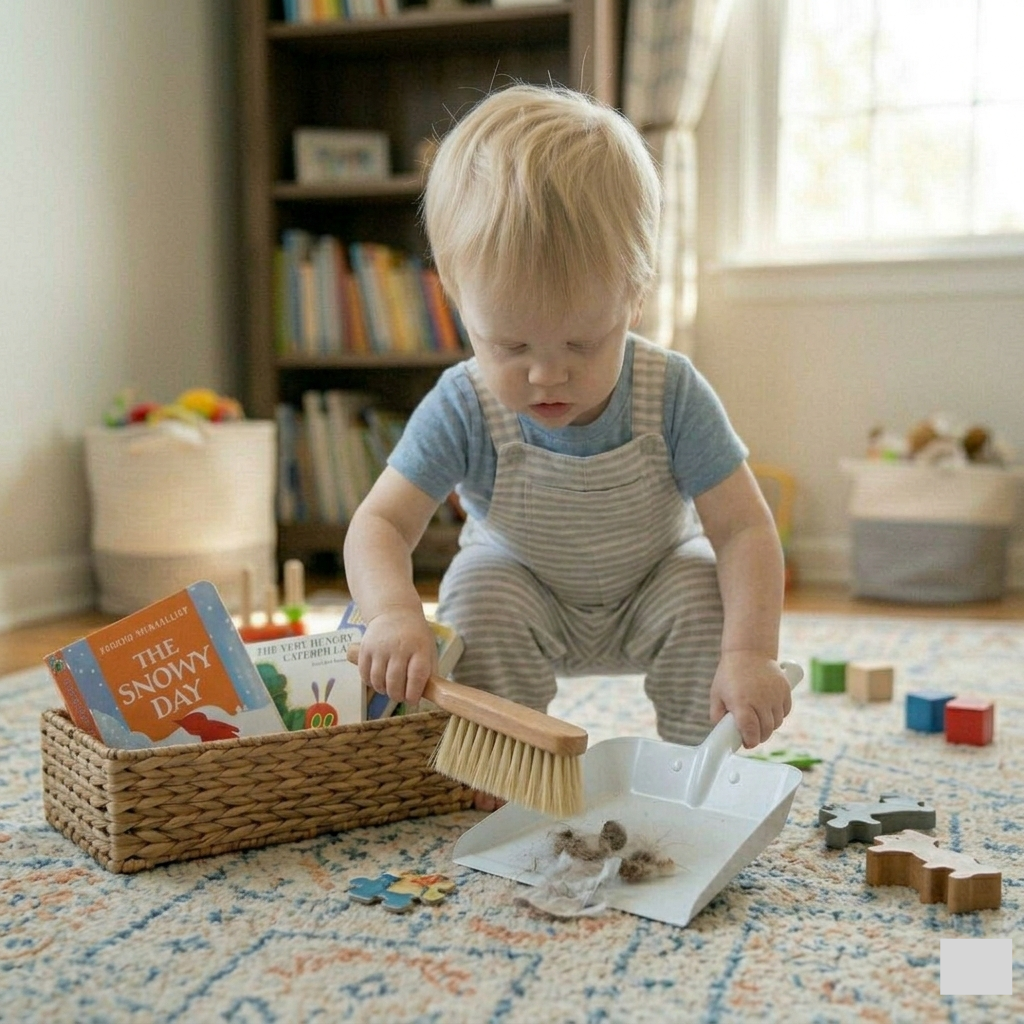
This sounds like I’m making them do chores (I mean… kind of), but they genuinely love it. Spill some dry cereal or lentils on a hard floor and hand them the brush and pan.
The challenge of sweeping small items into a dustpan requires real coordination and concentration. Plus you end up with a cleaner floor.
We got this toddler-sized cleaning set and it’s been used almost every single day — my son now brings it out unprompted when he spills something, which is both adorable and incredibly convenient.
15. 🎶 Rhythm and Sound Exploration
What you need: Wooden spoons, pots, shakers made from plastic bottles filled with rice
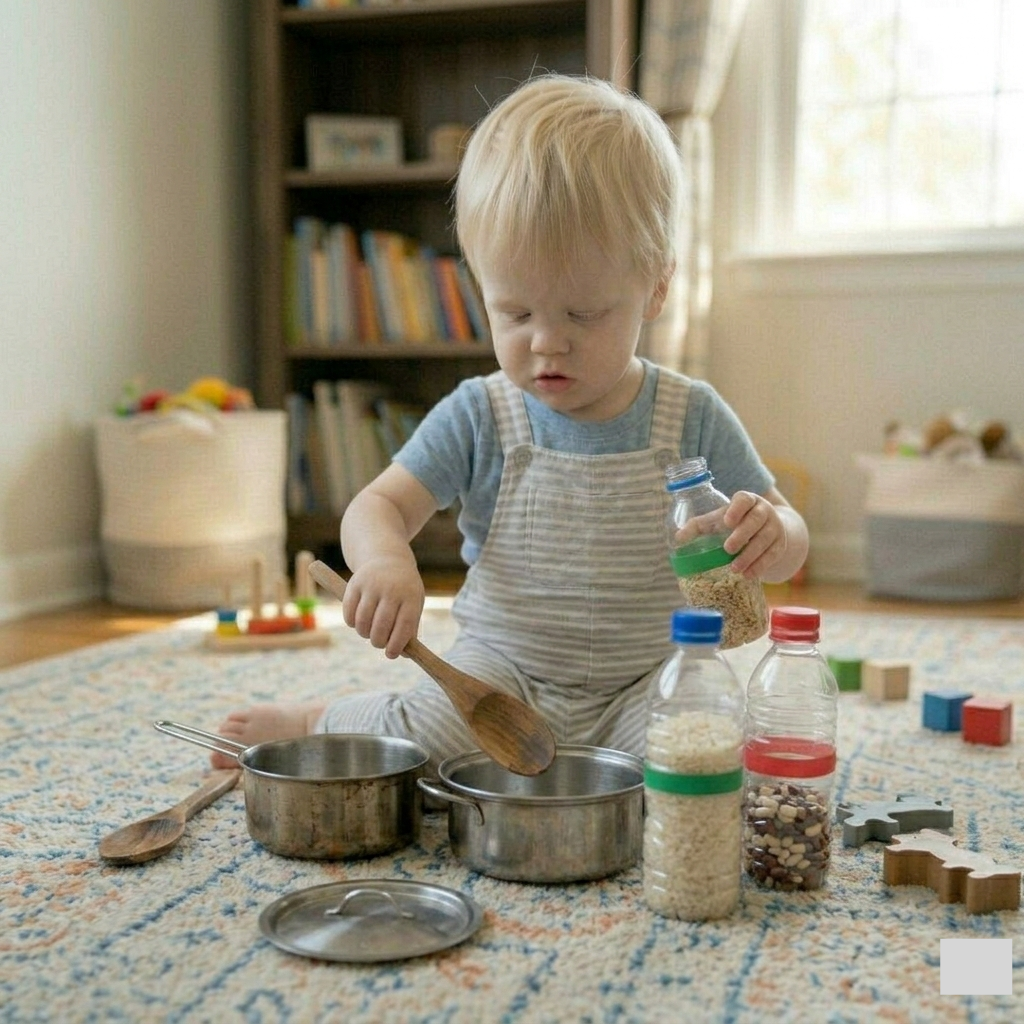
Let them bang, shake, and experiment with sound. You can make simple shakers from sealed bottles of dried rice or beans.
Music and rhythm support language development, and at 2 years old, making noise is deeply instinctive. Lean into it. (Maybe wear earplugs.)
How to Set Up a Montessori Space at Home (Without Redoing Your Whole House)
You do not need a Pinterest-perfect Montessori playroom. I want to be very clear about that.
What you do need:
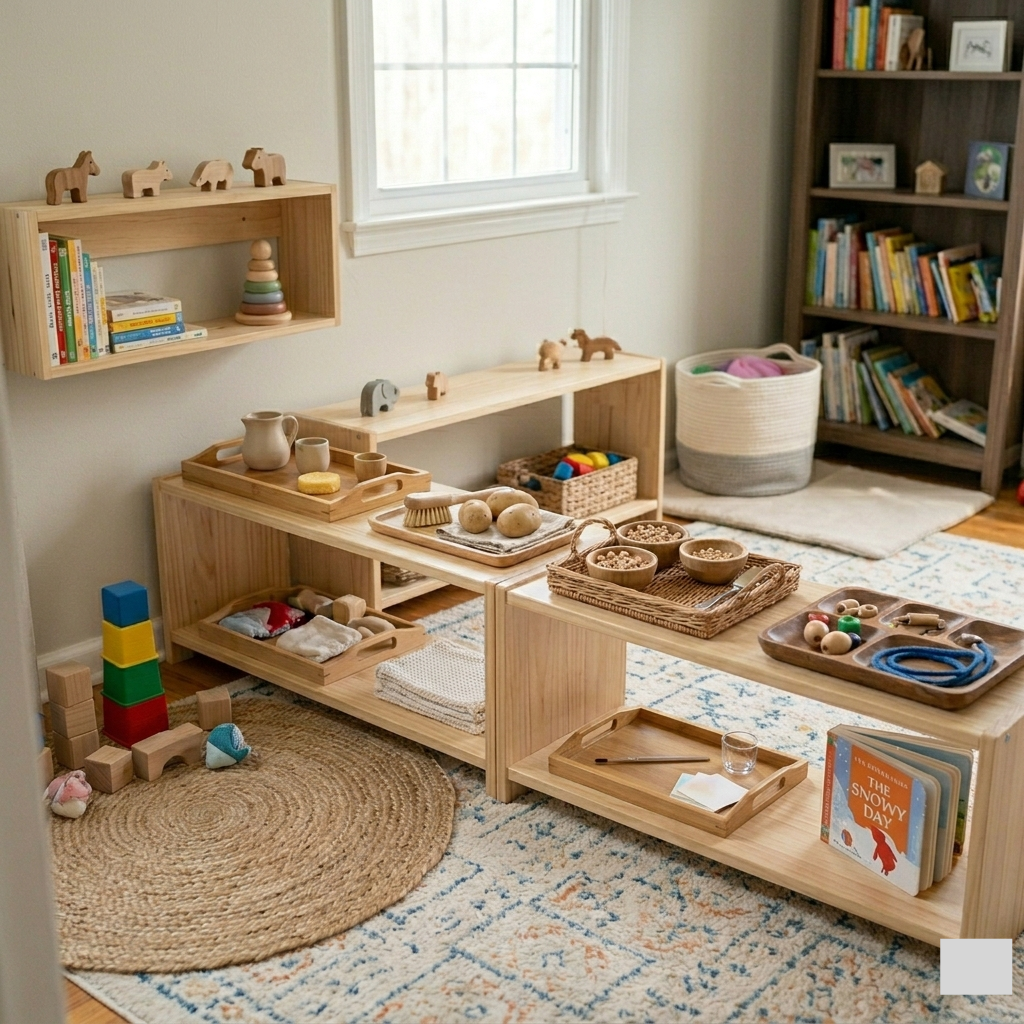
Low shelves. Put activities at their level. When things are accessible, children choose independently. When things are only accessible by asking an adult, they rely on you for everything.
Rotate toys and activities. Put out 4-6 activities at a time and swap them weekly. Too many choices cause overwhelm. Too few cause boredom. Less is genuinely more.
A yes space. Designate one area where everything is safe and touchable. They don’t hear “no” in that space. It’s liberating for both of you.
Real tools. Wherever possible, use real (small) versions of things rather than toys. A small real pitcher instead of a plastic pretend one. A real vegetable brush. A real paintbrush. They know the difference and they care about it.
A Note on What “Success” Looks Like
Here’s what I had to unlearn: Montessori activities don’t have an end product. There’s no finished drawing, no completed craft to stick on the fridge.
Success looks like your 2 year old sitting with an activity for 10 minutes. It looks like them repeating the same spooning exercise four times in a row. It looks like deep concentration on something that seems, to us, completely mundane.
The first time I sat back and just watched my son work without jumping in to help or redirect — that was when I understood it. He didn’t need me to make it more exciting. He was already exactly where he needed to be.
🛒 Quick Amazon Product Roundup
Here are the products mentioned in this post — all easy to find and genuinely worth it:
| Activity | Product | Link |
|---|---|---|
| Water Pouring | APLAINR Mini Stainless Steel Montessori Pitcher | View on Amazon |
| Spooning & Transferring | Wooden Sensory Bin Tools | View on Amazon |
| Locks & Latches | deMoca Wooden Montessori Busy Board | View on Amazon |
| Sensory Bin | MONT PLEASANT Sensory Bin Toys Set | View on Amazon |
| Threading Beads | BMTOYS Wooden Threading Beads | View on Amazon |
| Sweeping | Toddler Montessori Cleaning Set | View on Amazon |
❓ FAQ: Montessori Activities for 2 Year Olds
Q: How long should a 2 year old do Montessori activities?
There’s no set time — follow your child’s lead. Some toddlers will engage for 5 minutes, others for 30. The key Montessori principle is never to interrupt a child who is deeply concentrated. When they’re done, they’ll move on.
Q: Do I need to buy Montessori toys?
Absolutely not. Most of the best Montessori activities for 2 year olds use everyday household items — bowls, spoons, water, dried beans, and paper. Save your money and start with what you have.
Q: How is Montessori different from normal play?
The biggest difference is intentionality. Montessori activities are set up with a specific skill in mind and are self-correcting where possible (meaning the child can see when they’ve made a mistake without an adult telling them). They also prioritise real, natural materials rather than plastic toys with lights and sounds.
Q: What if my 2 year old loses interest immediately?
That’s completely normal, especially at the start. Don’t force it. Put it away and try again another day. Some activities click right away, others take a few introductions. And some just won’t be right for your child — that’s fine too.
Q: How do I introduce a Montessori activity?
Show, don’t tell. Sit with them, demonstrate the activity slowly and silently, then step back. Toddlers learn through watching first. Try not to narrate too much — let the activity speak for itself.
Q: Can I do Montessori at home if my child goes to a regular daycare?
Yes, 100%. Montessori at home is completely independent of schooling. Even 20-30 minutes of intentional activity a day makes a real difference in how your child plays and learns.
Q: What are the best first Montessori activities for a 2 year old just starting out?
Water pouring, sensory bins, and stacking/sorting are the easiest to set up and consistently engaging for this age. Start with one, see how it goes, and add more from there.
A Final Word: From One Mom to Another
Look — I’m not a Montessori expert. I’m a full-time IT person who became a mom and has been figuring this out one day at a time, just like you.
What I can tell you is that bringing a little bit of Montessori into our home genuinely changed the tone of our days. My son is calmer. He plays independently for longer. He’s proud of himself in a way that makes my heart ache in the best possible way.
And I get to be the mom who’s sitting nearby instead of constantly intervening — watching him become this capable, curious, determined little person — thinking, wow. He’s got this.
You don’t have to do all 15 activities. You don’t have to buy anything. Just pick one thing from this list this week. Try it. Watch what happens.
And if your toddler pours the water on the floor and looks you dead in the eye while doing it — that’s also very normal. We’ve all been there. 💛
You might also like: