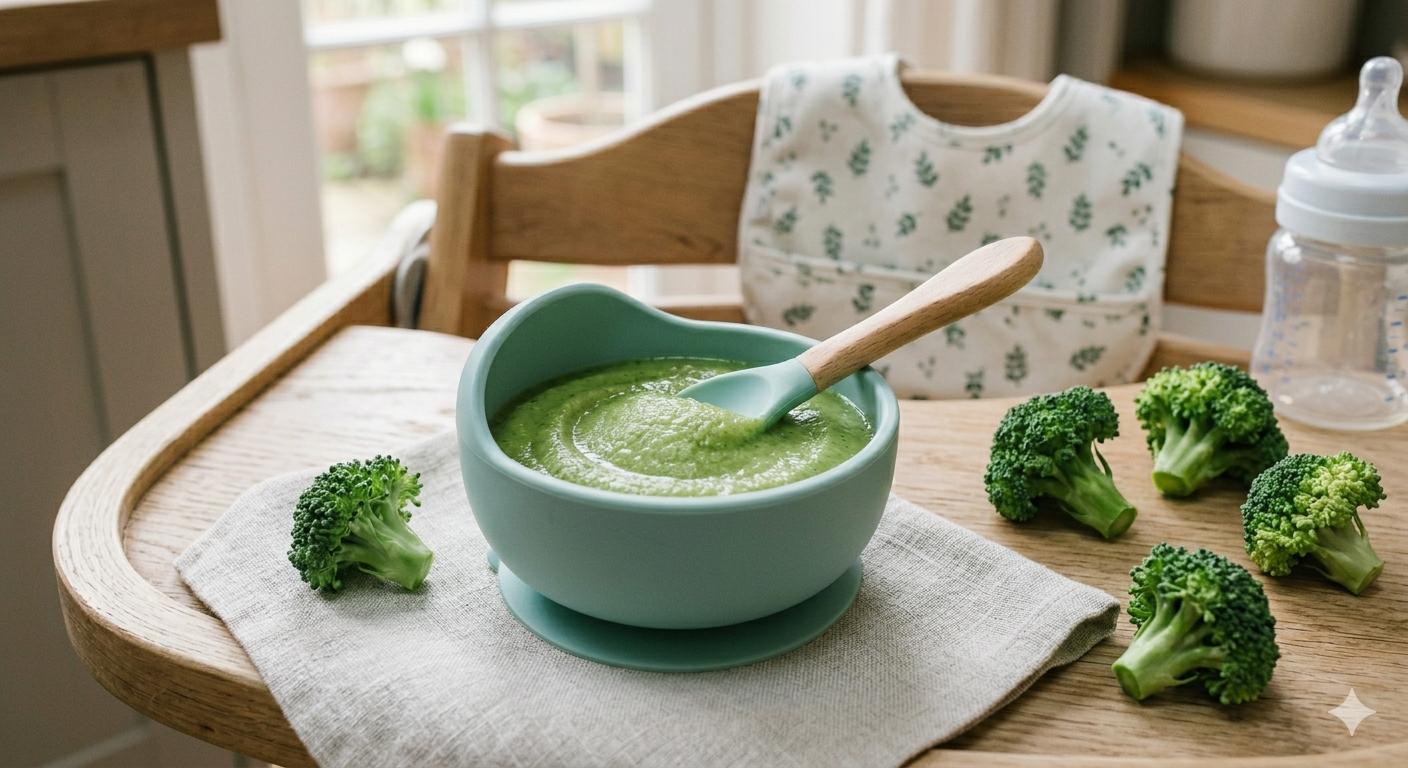
📌 This post may contain affiliate links. As an Amazon Associate, I may earn from qualifying purchases at no extra cost to you.
Starting solids with my baby felt exciting at first — until I actually started. I remember Googling things like “how to make carrot puree for baby” and “best first foods for babies 4 to 6 months” late at night while worrying whether my baby was eating enough. Some days he loved pear puree. Other days he completely rejected foods he had eaten the day before. The exhaustion, the mess, the constant second-guessing — I know you know exactly what I mean.
Like many parents, I wanted healthy homemade baby puree recipes that were simple, affordable, freezer-friendly, and realistic during busy days with a baby. After lots of trial and error, these baby puree recipes became our favourites. Some worked beautifully during teething, some helped with constipation, and some simply became comfort foods my baby asked for again and again.
In this guide you will find 24 easy baby food puree recipes — including 4 new recipes targeting the most-searched and fastest-growing queries right now: plum puree, watermelon puree, apricot puree, and prune puree. Every recipe includes a full ingredients list, step-by-step instructions, nutritional highlights and practical tips. Whether you are just starting solids or looking for new baby puree ideas, this guide has you covered.
And if you are wondering about baby led weaning versus purees — I cover that in the FAQ section below. Many parents do both, and that’s perfectly fine!
🔗 Also on ParentsGram: Once your baby moves past purees, explore our healthy toddler muffin recipes and 2-minute healthy toddler snacks — the next chapter after starting solids!
Baby Feeding Tools That Made Starting Solids So Much Easier
These tools genuinely transformed our puree stage
Before making homemade baby food regularly, these products genuinely made the puree stage easier for me. Freezing extra portions in silicone trays saved me enormous time on busy days — I cannot recommend it highly enough.
Grownsy Baby Food Maker
My #1 pick — steams and blends in one machine, no fuss
NutriBullet Baby System
Brilliant for batch making — powerful and incredibly easy to clean
Souper Cubes Freezer Trays
The only freezer trays I use — lids included, game-changing
Silicone Baby Spoons (6-Pack)
Soft, gentle on gums — we went through countless sets of these
NumNum Pre-Spoon GOOtensils
Perfect for self-feeding — our baby loved these from day one
PandaEar Silicone Bibs (3-Pack)
Waterproof, wipe-clean — saved our sanity during berry purees
Glass Baby Food Jars (8-Pack)
Leakproof, freezer-safe — no plastic near baby’s food ever
Ingenuity SmartClean High Chair
Converts as baby grows — wipes down in literally 10 seconds
Bonsenkitchen Immersion Blender
Blend single portions right in the pot — quick and easy cleanup
Ziploc Gallon Freezer Bags
Label and store frozen puree cubes — up to 3 months per batch
I get asked constantly what gear I actually used during the puree stage — so here is my honest, tried-and-tested rundown. These are the products that genuinely made making homemade baby food easier, less stressful and more enjoyable. Every single one is a must-buy in my opinion — I would buy them all again without hesitation.
This machine changed everything for me. Before I had the Grownsy, making baby food felt like a production — multiple pots, a blender, so much washing up. With this one appliance, I steam and blend in the exact same container. It automatically steams, grinds and even sterilises — all with one button. The auto-cooking and grinding feature meant I could set it going and come back to perfectly smooth puree without standing over the stove. I used this almost every single day for months and it never let me down. If you only buy one piece of baby food equipment, make it this one.
The NutriBullet Baby is what I used before discovering the Grownsy, and honestly it is still an incredible machine. The 32oz capacity is brilliant for batch making — I would blend a full week’s worth of sweet potato puree in minutes and then freeze it all in one go. The NutriBullet is especially powerful for tougher vegetables like carrots and broccoli that need a really thorough blending to get silky smooth. It is also stupidly easy to clean — just rinse and it’s done. If you already own a NutriBullet, this baby version is an absolute no-brainer addition to your kitchen.
I cannot overstate how much these trays transformed our meal prep. Before Souper Cubes, I was using regular ice cube trays and constantly knocking them over in the freezer, losing puree everywhere. These have lids — LIDS! — which means I can stack them, freeze neatly and nothing spills. The 1-cup size is perfect for portioning individual baby meals and they pop out so easily once frozen. I have two packs and use both every single week. The silicone is thick, high quality and genuinely flexible — the frozen cubes come out in one clean push. These are a must-buy if you are doing any batch cooking at all.
You will go through baby spoons faster than you think — they get lost, chewed up, and left at grandma’s house constantly. Having a 6-piece set means you always have a clean one ready when you need it. These soft silicone spoons are genuinely gentle on baby’s gums and easy for little mouths to accept food from. They are dishwasher-safe AND boil-proof, which means sterilising is completely fuss-free. I always kept at least two in the changing bag and a full set in the kitchen drawer. At this price for six, they are an absolute steal and a complete must-buy.
These are unlike any other baby spoon I have seen — and my baby was obsessed with them. The GOOtensil design means baby can dip the spoon into puree and it naturally scoops up the right amount, making self-feeding genuinely possible from 6 months. My little one started feeding himself with these far earlier than I expected. They are perfect if you are doing a combination of spoon-feeding and baby led weaning (BLW) — which is exactly what we did. BPA-free, dishwasher safe and they come in the most cheerful colours. Genuinely one of my favourite baby products ever bought.
If you have ever tried to wash a cloth bib after blueberry puree, you will understand immediately why silicone bibs are a complete non-negotiable. These PandaEar bibs wipe clean in literally five seconds — no soaking, no scrubbing, no staining. The pocket at the bottom catches fallen food brilliantly which means less mess on the high chair and floor (well, less-ish — let’s be honest). They are soft and flexible so baby doesn’t find them uncomfortable, and the sizing is generous enough that we used them well into toddlerhood. The set of three means there is always a clean one available. Honestly a must-buy before you even start solids.
I made the switch from plastic to glass storage containers early on and I have never looked back. These 4oz jars are the perfect portion size for individual baby meals — just right for 1–2 servings depending on age. They are leakproof, freezer-safe AND dishwasher-safe, which means they do literally everything. I love knowing there is zero plastic leaching into my baby’s food when I heat it. The glass stays pristine after dozens of washes — no staining, no smells, no degradation. Getting 8 in a pack means you can prep a full week’s worth of purees at once. Worth every penny.
A high chair is one of those purchases where you really do get what you pay for — and the Ingenuity SmartClean is worth every single penny. The SmartClean design means the tray, seat pad and frame all wipe down in seconds, which during the puree stage is absolutely crucial. I have cleaned blueberry puree, carrot puree and spinach puree off this chair more times than I can count — and it always comes up spotless. The 3-in-1 convertible design means it works as a high chair, toddler chair and dining booster, so it grows with your baby all the way to toddlerhood. Unisex design, easy to assemble and genuinely sturdy. A complete must-buy.
While the Grownsy is my main machine for big batch cooking, this Bonsenkitchen immersion blender is what I reach for when I need a quick single portion — like blending half a steamed pear straight in the saucepan without transferring to a blender. It is compact, lightweight and incredibly easy to use with one hand while holding a curious baby on your hip with the other. The stainless steel blades are robust and genuinely powerful for such a small tool. Cleanup is as simple as blending soapy water for five seconds. If you ever find yourself mid-nap-time trying to make a quick puree in silence, this is the tool you want.
Once you have popped your puree cubes out of the Souper Cubes trays, you need somewhere to store them long-term in the freezer — and Ziploc gallon bags are the unbeatable answer. The stay-open design is genuinely useful when you are trying to load frozen cubes with one hand. I would fill one bag per flavour, label it clearly with the date and content, and have an organised freezer full of ready-to-go baby meals for the whole week. At 66 bags per pack, this will last you the entire puree stage and well beyond. Simple, practical and completely essential for any parent doing batch cooking.
24 Easy Baby Puree Recipes for Starting Solids
All recipes include full ingredients, step-by-step instructions, nutritional highlights and tips
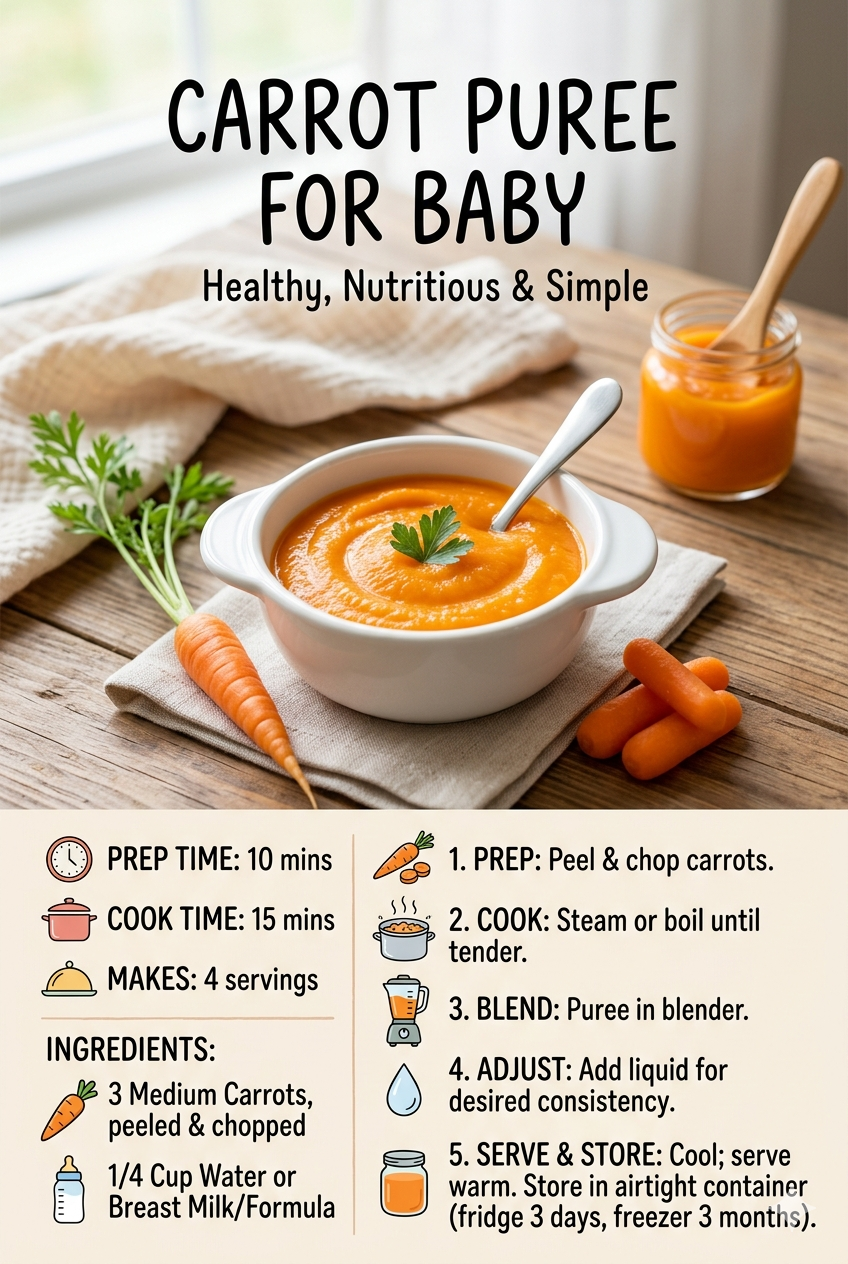
Carrot Puree Recipe for Baby
🥕 Best First Food · 4–6 Months+Carrot puree was one of the very first foods I introduced — and for good reason. The natural sweetness makes it one of the easiest first foods for babies to accept right away. That early win matters so much when you are just starting out. Rich in beta-carotene and vitamin A, this simple homemade carrot puree for baby is as nutritious as it is easy to make. It also freezes beautifully, making it a perfect batch-cooking choice.
🛒 Ingredients
- 2 large carrots
- ¼–½ cup water, formula, or breastmilk
🧰 Equipment Needed
- Steamer basket or pot
- Blender or baby food maker
- Silicone freezer tray
- Soft baby spoon
👩🍳 Step-by-Step Instructions
- Wash, peel and chop: carrots into small, even chunks.
- Steam: for 15–20 minutes until completely soft. A fork should slide in with zero resistance.
- Blend: Add carrots to blender. Slowly add liquid while blending until silky smooth.
- Check consistency: Should be completely lump-free for younger babies. Add more liquid to thin.
- Cool and serve: Cool before serving. Freeze extras in a silicone tray immediately.
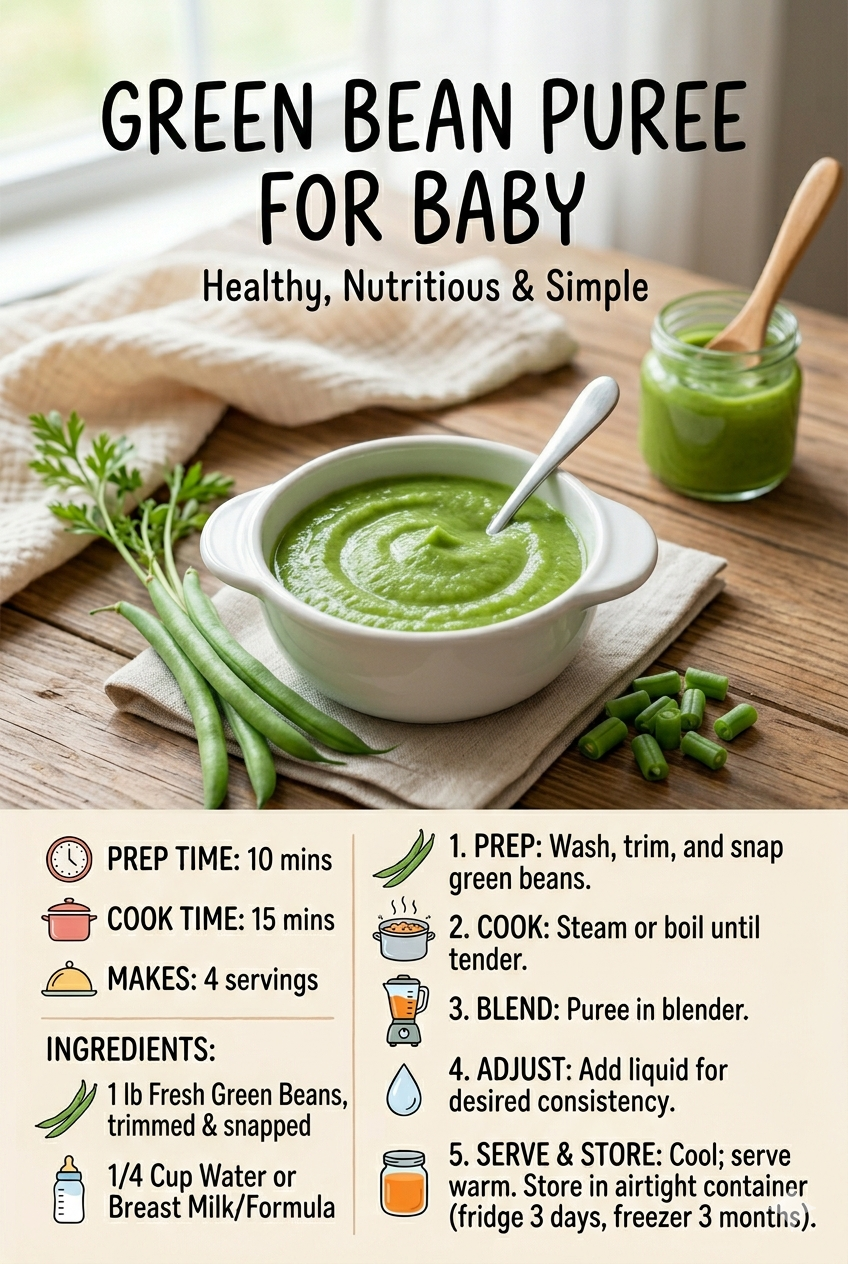
Green Bean Puree for Baby
🫘 Vegetable Introduction · 6 Months+Green bean puree took a few tries before my baby truly liked it — and that is completely normal with any new vegetable. But persistence pays off. This green bean baby puree is loaded with vitamin C, vitamin K and iron. The key is blending it long enough to get a truly smooth texture, and straining it for younger babies.
🛒 Ingredients
- 1 cup green beans
- ¼ cup water
🧰 Equipment Needed
- Steamer basket
- Blender
- Fine mesh strainer
- Silicone freezer tray
👩🍳 Step-by-Step Instructions
- Wash and trim: the ends from green beans.
- Steam: for 12–15 minutes until completely soft.
- Blend: with water until as smooth as possible.
- Strain: through a fine mesh strainer if the texture seems fibrous — essential for younger babies.
- Cool and serve: Freeze extras in portions immediately.
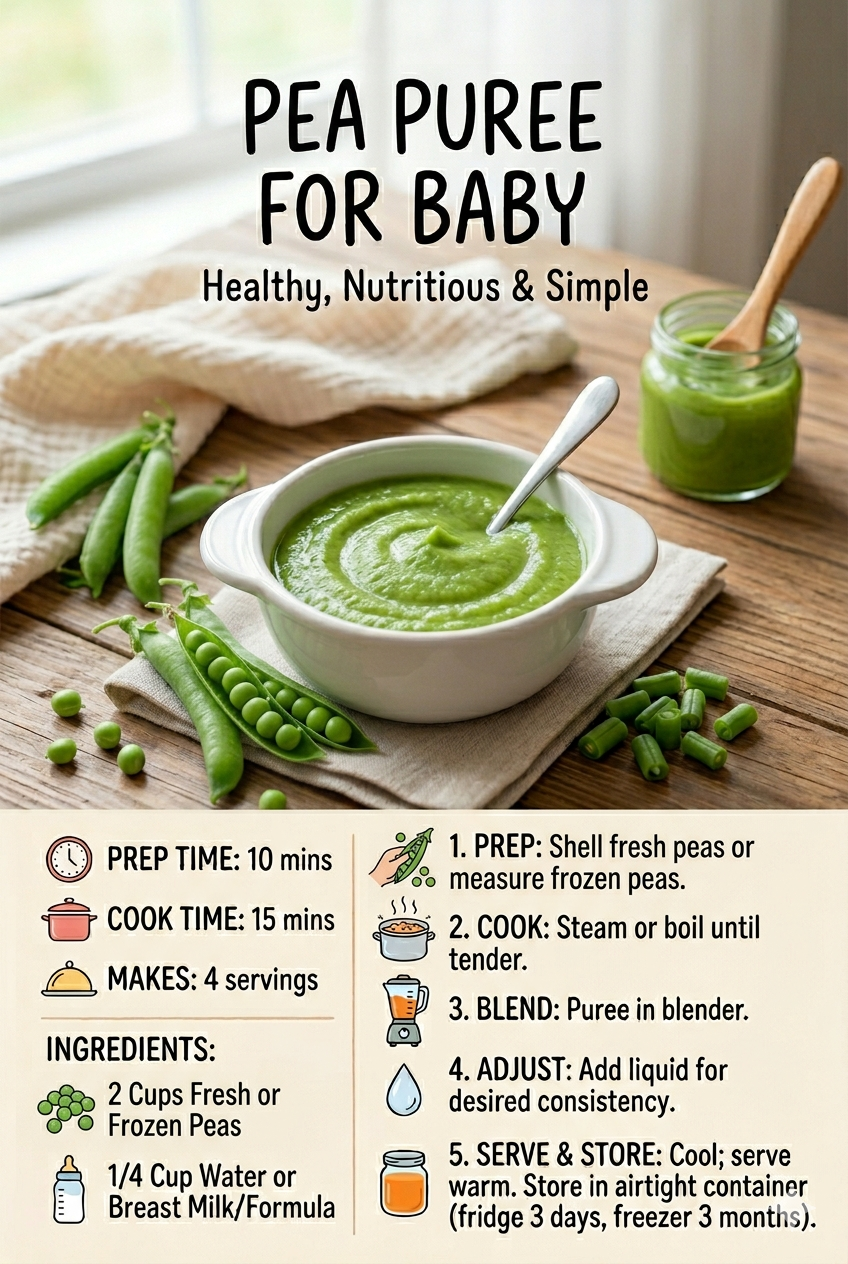
Pea Puree for Baby
🟢 Iron & Protein · 6 Months+Pea puree is one of the easiest homemade baby food recipes you will ever make — because frozen peas work perfectly and skip all the prep work. They are also secretly one of the most nutritious options, packed with plant-based protein, iron and vitamin C. My baby took to pea puree much faster than I expected, especially when blended very smooth.
🛒 Ingredients
- 1 cup frozen peas
- Warm water as needed
🧰 Equipment Needed
- Small saucepan or steamer
- Blender
- Fine mesh sieve
- Silicone freezer tray
👩🍳 Step-by-Step Instructions
- Steam: frozen peas for 4–5 minutes until completely heated through and soft.
- Blend: with warm water, adding gradually until creamy and smooth.
- Strain: through a fine sieve for a silky smooth texture suitable for younger babies.
- Cool and serve: Portion leftovers into a silicone tray and freeze.
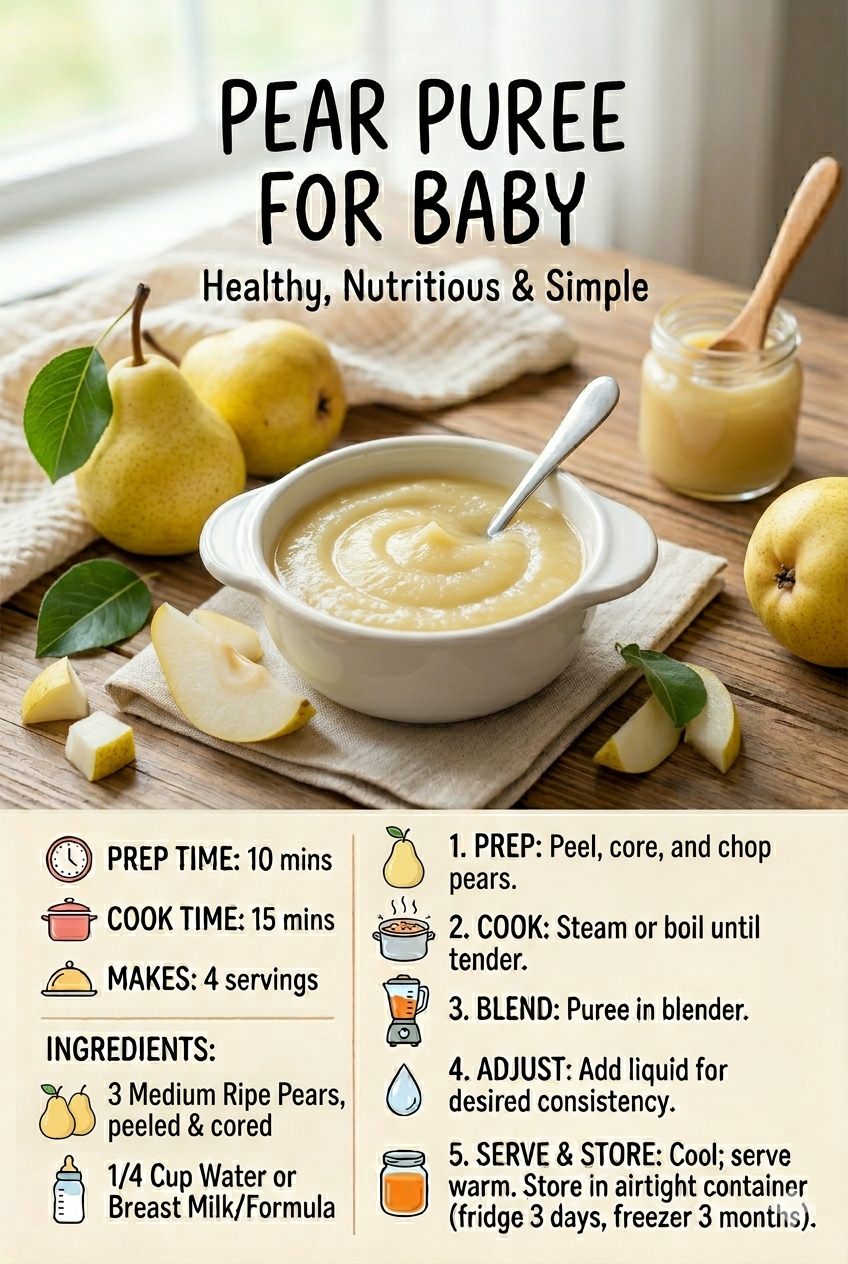
Pear Puree Recipe for Baby
🍐 Teething · Constipation · 4–6 Months+Pear puree became our absolute favourite during teething — it is soft, silky, naturally sweet and so gentle on tiny tummies. It was one of the few foods my baby consistently accepted even on his most difficult teething days. Pear puree recipe for baby is also widely recommended by paediatricians to help relieve baby constipation naturally — the sorbitol in pears acts as a gentle, safe stool softener. This makes it one of the most useful first foods for babies you can have in your rotation.
🛒 Ingredients
- 2 ripe pears
- Water as needed
🧰 Equipment Needed
- Peeler and knife
- Steamer basket
- Blender
- Silicone freezer tray
👩🍳 Step-by-Step Instructions
- Peel and chop: pears, removing the core and all seeds.
- Steam lightly: for 8–10 minutes until soft. Very ripe pears may need minimal steaming.
- Blend: until completely silky smooth, adding a little water if needed.
- Serve slightly chilled: during teething — the cool temperature provides soothing relief.
- Freeze extras: in silicone trays for up to 3 months.
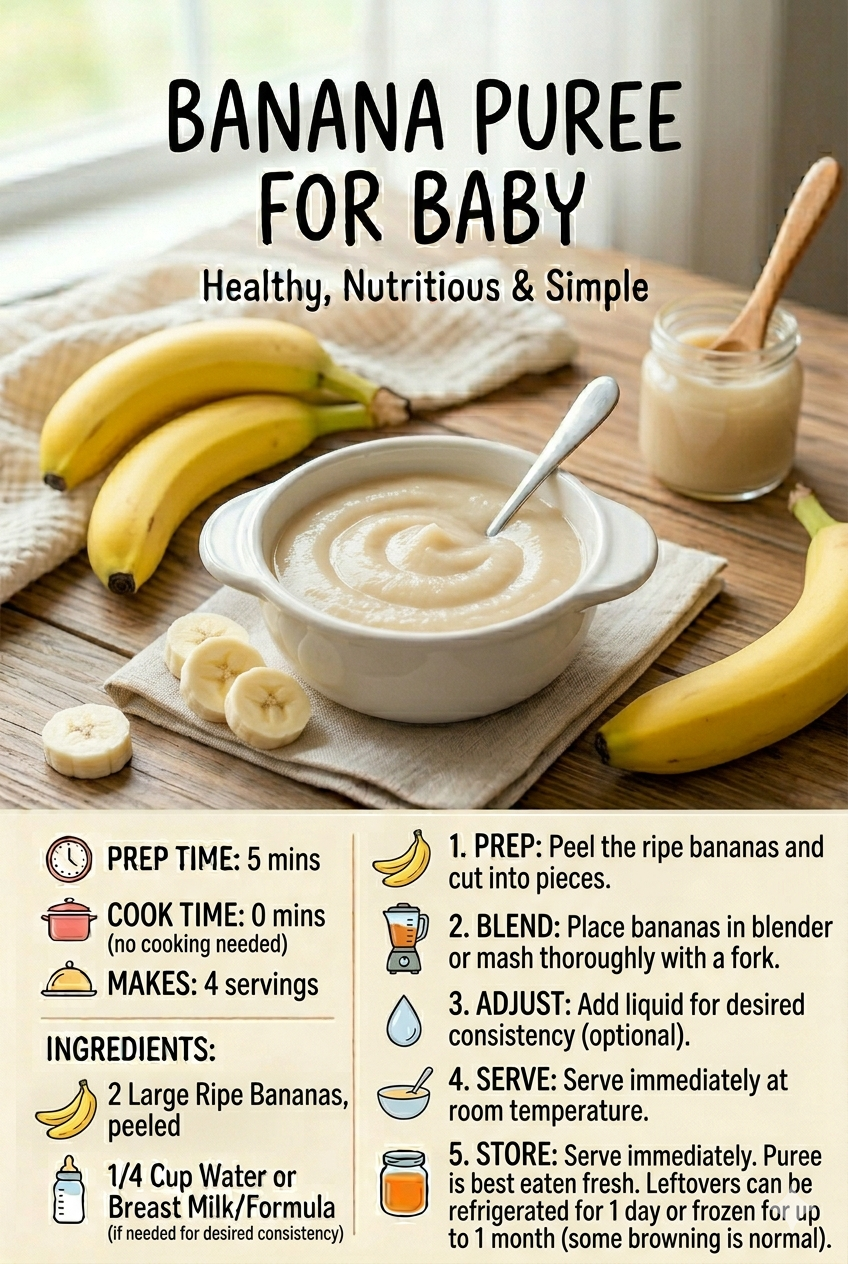
Banana Puree for Baby
🍌 Quick Breakfast · First Foods · 4–6 Months+Banana puree saved me on chaotic mornings more times than I can count. It takes less than two minutes, requires zero cooking, and babies almost universally love it from the very first spoonful. The natural sweetness and creamy texture make it one of the most accepted first foods for babies starting solids. Rich in potassium, vitamin B6 and natural energy, it is a genuine breakfast winner on the hardest mornings.
🛒 Ingredients
- 1 ripe banana
- Breastmilk, formula, or water
🧰 Equipment Needed
- Fork
- Small bowl
👩🍳 Step-by-Step Instructions
- Peel: a ripe banana — the spottier the better.
- Mash: thoroughly with a fork in a small bowl until no lumps remain.
- Add liquid: gradually — breastmilk, formula or water — until smooth and pourable.
- Serve immediately: Banana puree browns quickly so always make fresh and serve right away.
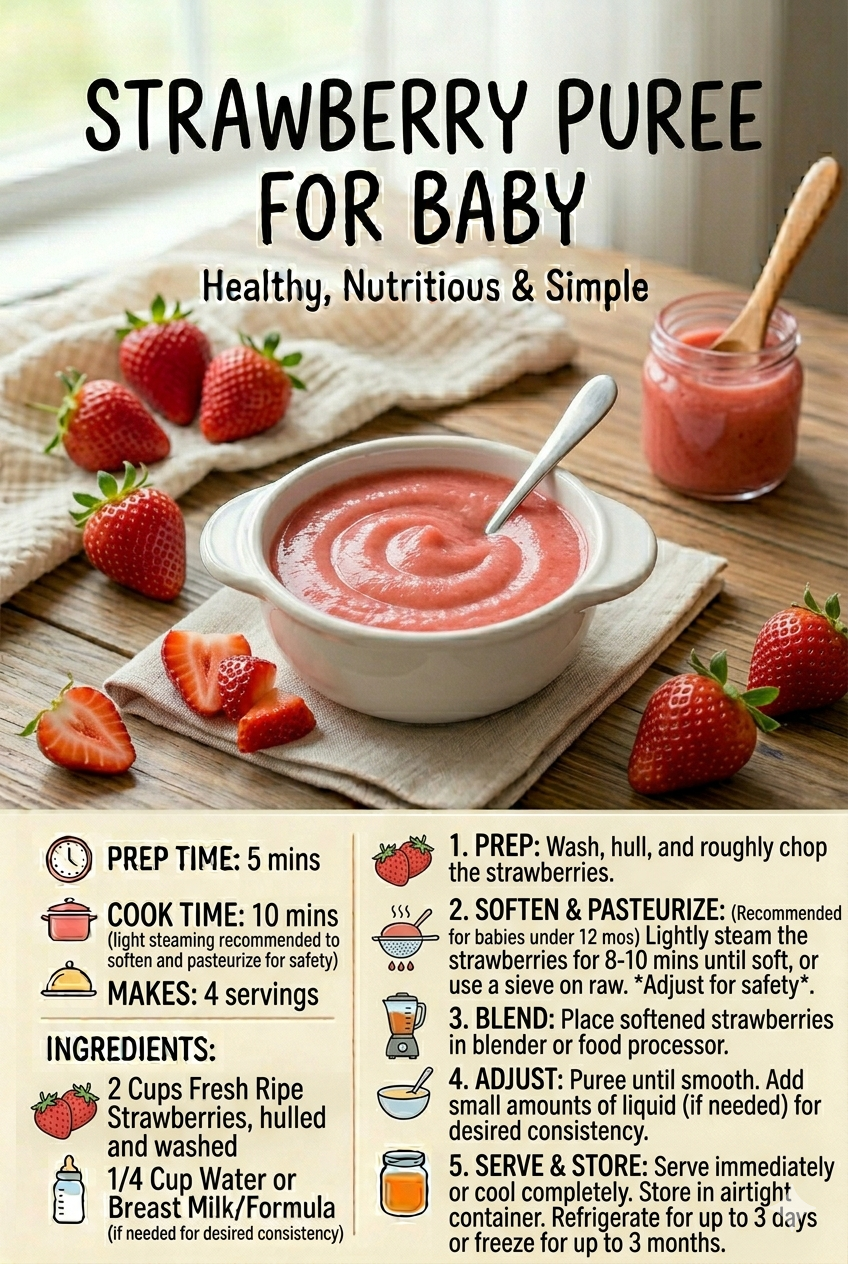
How to Make Strawberry Puree for Baby
🍓 Vitamin C Boost · 6 Months+Strawberry puree quickly became one of the messiest foods in our house — but my baby absolutely loved it from the very first taste. Knowing how to make strawberry puree for baby is a skill every parent needs. Strawberries are packed with vitamin C, antioxidants and folate, making this one of the most nutritious fruit purees for babies you can make. Just get the silicone bib ready!
🛒 Ingredients
- 1 cup fresh strawberries
- Water if needed
🧰 Equipment Needed
- Blender
- Fine mesh strainer
- Silicone bib (trust me!)
- Silicone freezer tray
👩🍳 Step-by-Step Instructions
- Wash: strawberries thoroughly under cold running water.
- Remove stems: and hull completely.
- Blend: until completely smooth. Add a tiny splash of water if needed.
- Strain: through a fine mesh strainer for younger babies to remove any seeds.
- Serve fresh: or freeze in portions for up to 3 months.
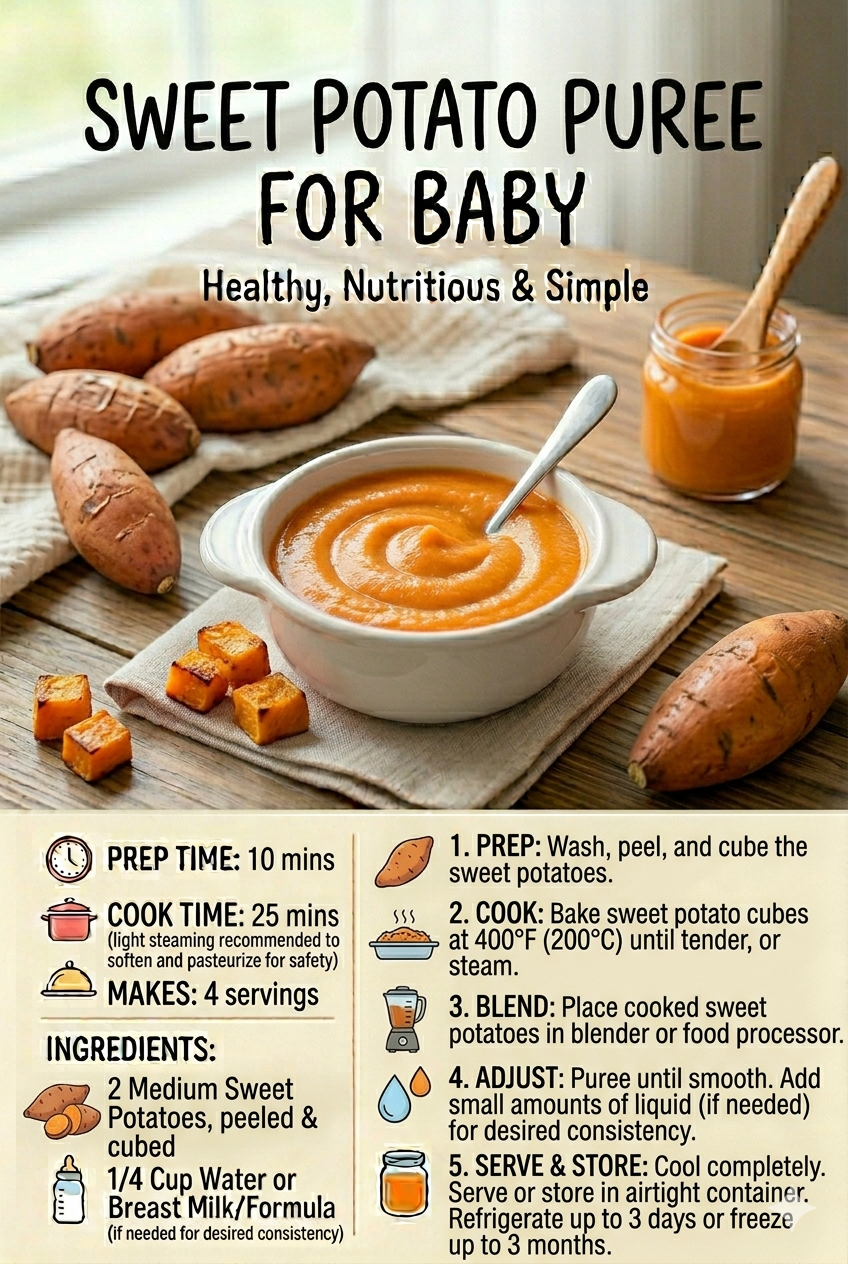
Sweet Potato Puree for Baby
🍠 Best First Food · Nutrient Boost · 4–6 Months+Sweet potato puree is creamy, naturally sweet, filling for growing babies and packed with more nutrients than almost any other first food. According to Google Trends, sweet potato puree for baby is consistently one of the highest-searched baby food terms — and for very good reason. Loaded with vitamin A, potassium and fibre, it was my baby’s most consistently loved puree throughout the entire starting solids journey. It also freezes beautifully and mixes brilliantly with almost any other puree.
🛒 Ingredients
- 1 medium sweet potato
- Water as needed
🧰 Equipment Needed
- Peeler and knife
- Steamer or pot
- Blender
- Silicone freezer tray
👩🍳 Step-by-Step Instructions
- Peel and cube: sweet potato into even chunks for consistent cooking.
- Steam: for 18–20 minutes until a fork slides through with no resistance at all.
- Blend: with water adding gradually until completely smooth and creamy.
- Cool completely: before serving or freezing.
- Freeze in portions: This puree freezes exceptionally well for up to 3 months.
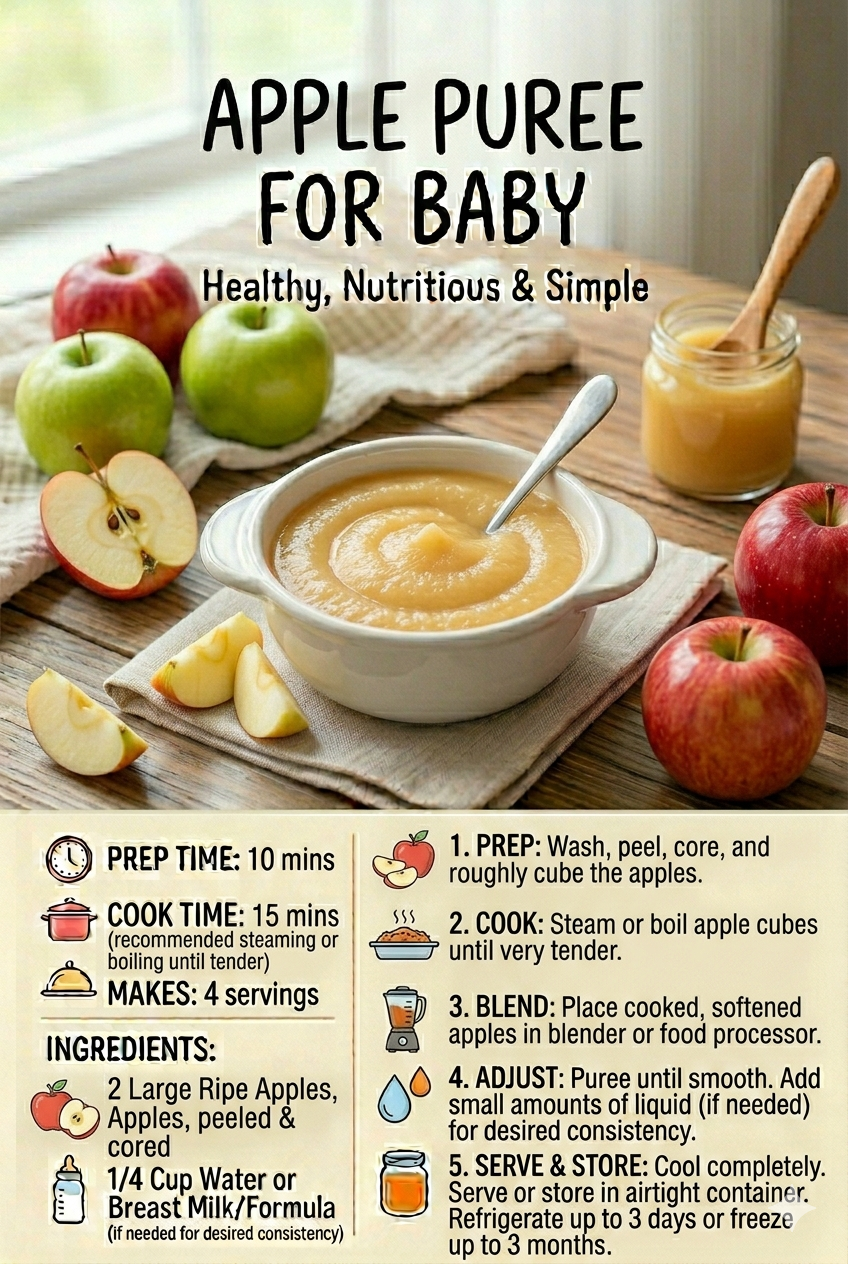
Apple Puree for Baby
🍎 Classic First Food · Digestion · 4–6 Months+Apple puree is one of the most classic and universally loved first foods for babies. The familiar sweetness is easy for babies to accept, the soft texture blends perfectly smooth, and the vitamin C content helps with iron absorption from other foods — a brilliant nutritional pairing. This is a recipe you will return to again and again throughout the entire starting solids journey.
🛒 Ingredients
- 2 medium apples (sweeter varieties work best)
- Water as needed
🧰 Equipment Needed
- Peeler, corer and knife
- Steamer basket
- Blender
- Silicone freezer tray
👩🍳 Step-by-Step Instructions
- Peel, core and chop: apples into even pieces.
- Steam: for 10–12 minutes until completely tender.
- Blend: until silky smooth, adding water as needed.
- Cool and serve: Freeze extras in portions immediately.
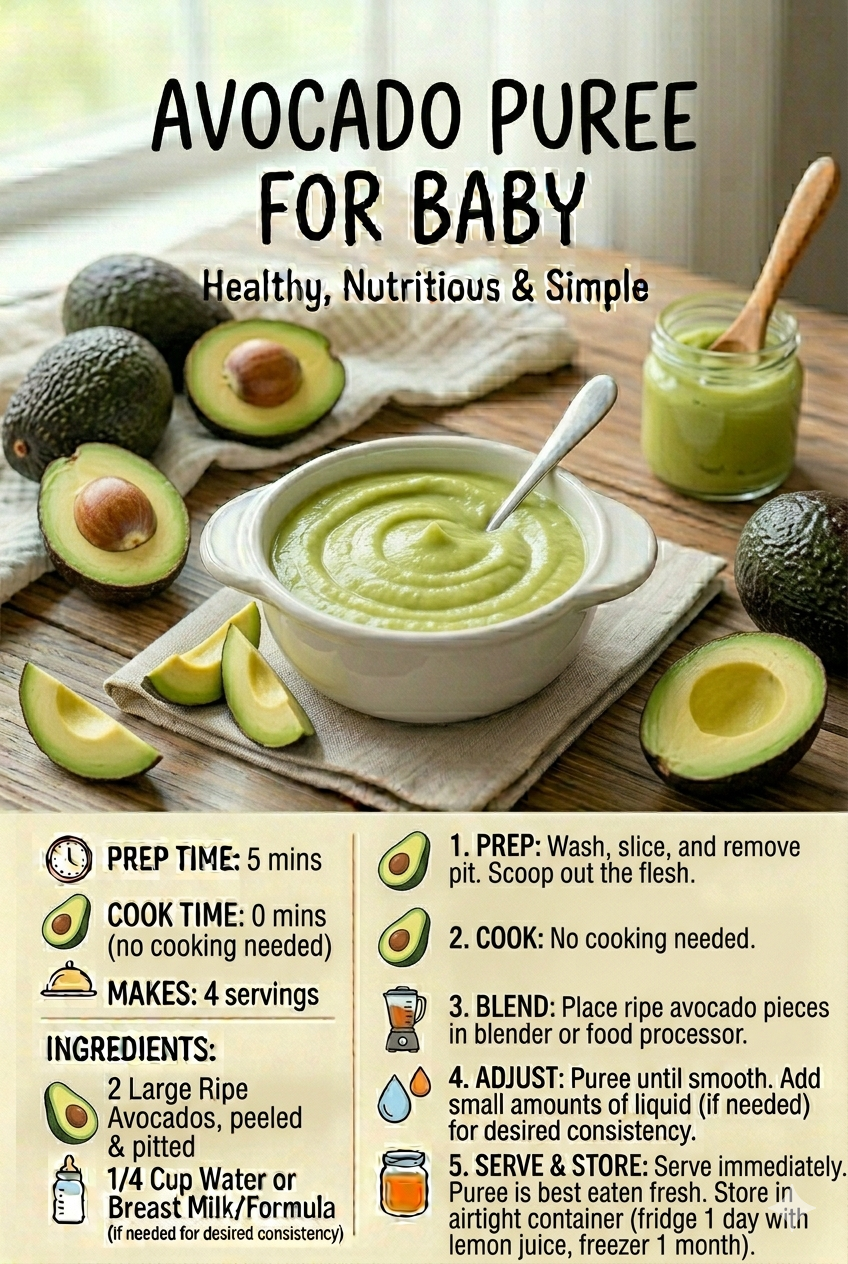
Avocado Puree for Baby
🥑 Brain Development · Healthy Fats · 6 Months+Avocado puree became one of my favourite quick lunches during the puree stage — it requires almost zero prep. But don’t let the simplicity fool you: avocado is one of the most nutrient-dense first foods for babies available. Packed with healthy monounsaturated fats that actively support brain development, plus folate, potassium and vitamin E — it is a genuine superfood for growing babies.
🛒 Ingredients
- 1 ripe avocado
- Breastmilk or water
🧰 Equipment Needed
- Fork or blender
- Small bowl
👩🍳 Step-by-Step Instructions
- Cut avocado: in half and remove the pit.
- Scoop: the flesh into a small bowl.
- Mash or blend: until completely creamy and smooth.
- Add liquid: if needed to thin the consistency.
- Serve immediately: before browning occurs.
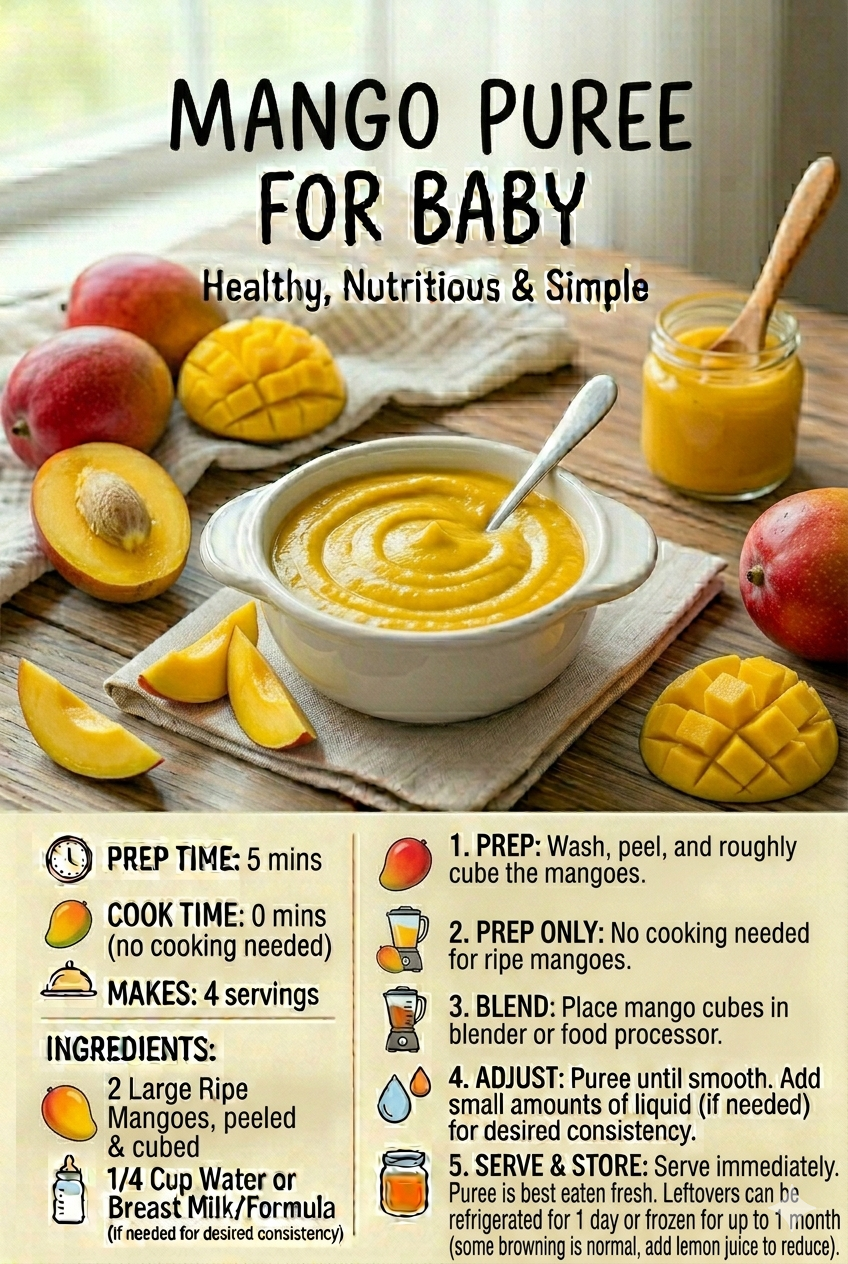
Mango Puree for Baby
🥭 Vitamin C · Warm Months · 6 Months+Mango puree is sweet, tropical, vibrant and perfect during warmer months. The naturally silky texture of ripe mango blends into an incredibly smooth puree that most babies accept immediately. Rich in vitamin C, vitamin A and folate, mango is a brilliant fruit to introduce early. Frozen mango chunks work just as well as fresh — making this an affordable, convenient year-round baby fruit puree.
🛒 Ingredients
- 1 ripe mango (or 1 cup frozen mango chunks)
- Water if needed
🧰 Equipment Needed
- Knife and cutting board
- Blender
- Silicone freezer tray
👩🍳 Step-by-Step Instructions
- Peel and chop: ripe mango removing the pit, or thaw frozen mango chunks.
- Blend: until completely smooth. Add a splash of water if needed.
- Serve fresh: or freeze in portions for up to 3 months.
- Serve chilled: during teething — freeze in ice cube trays and serve slightly thawed.
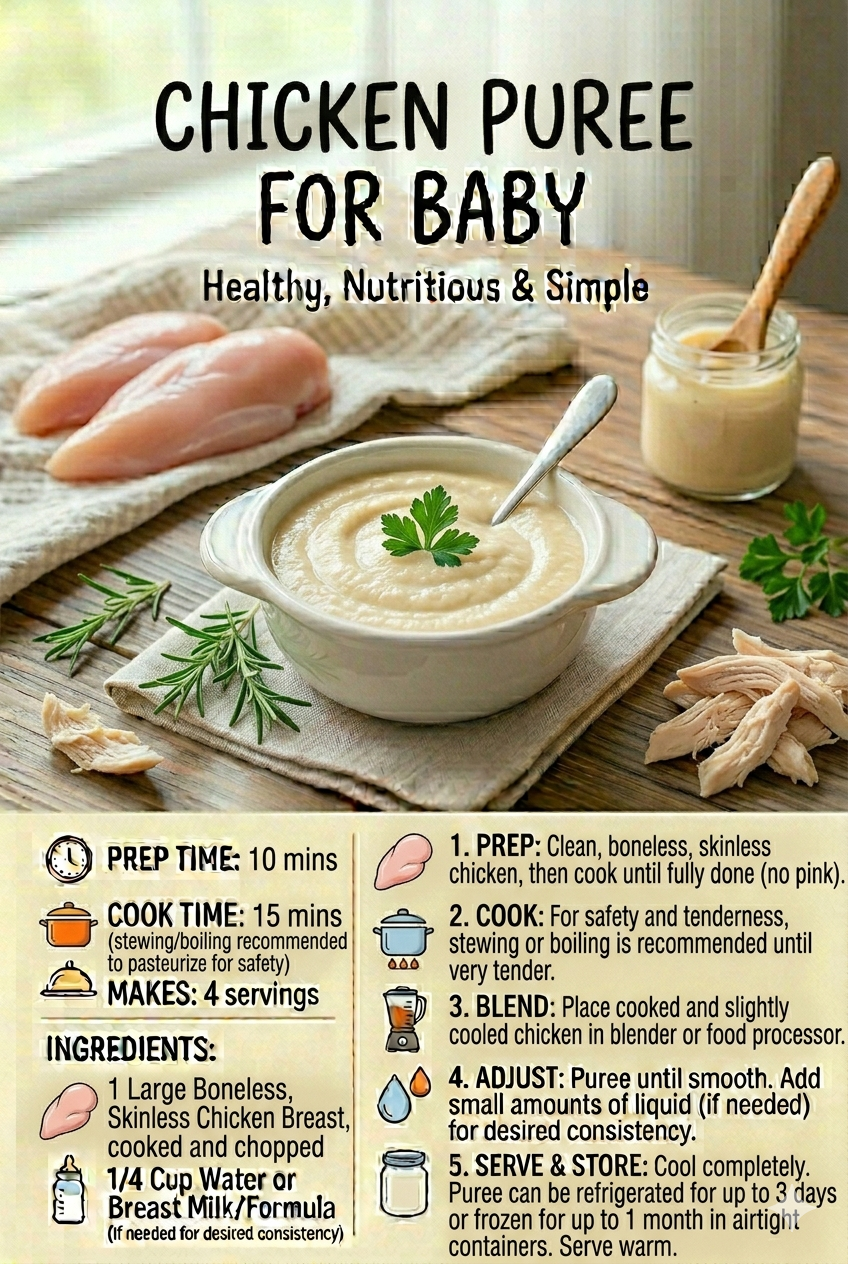
Chicken Puree for Baby
🍗 Protein · Iron · 6 Months+Introducing chicken puree felt genuinely intimidating at first — meat for a tiny baby felt like a big leap. But once I understood that babies need iron and protein from around 6 months, it made complete sense. Knowing how to puree meat for baby is a skill that pays off. The key to a good chicken puree is blending it significantly longer than you think necessary and using plenty of liquid for a truly silky result.
🛒 Ingredients
- 1 cooked chicken breast (no seasoning)
- Low sodium broth or water
🧰 Equipment Needed
- Baking dish or pan
- High-powered blender
- Silicone freezer tray
👩🍳 Step-by-Step Instructions
- Cook chicken: thoroughly — bake at 180°C for 20–25 minutes or poach in water. No salt.
- Cool slightly: then chop into small pieces.
- Blend: with low-sodium broth or water, adding liquid gradually.
- Blend much longer: than you expect — at least 2–3 full minutes for a truly smooth texture.
- Freeze in portions: Chicken puree freezes well for up to 3 months.
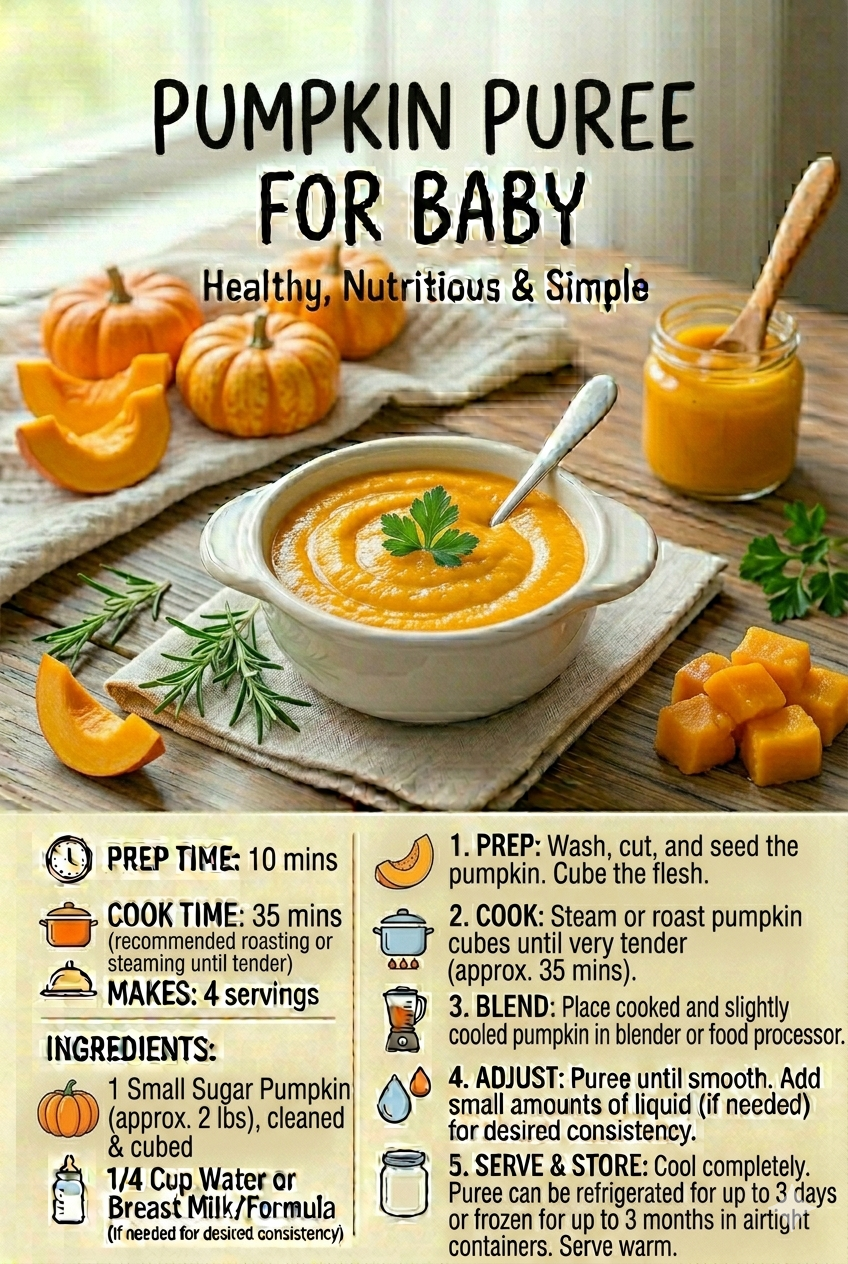
Pumpkin Puree for Baby
🎃 Seasonal · Digestion · 6 Months+Pumpkin puree is cosy, creamy and one of the most underrated baby purees in this guide. Pumpkin is loaded with vitamin A, fibre and zinc — all essential for a growing baby’s development. The mild, naturally sweet flavour pairs beautifully with apple or pear, and this puree freezes exceptionally well making it a fantastic batch-cooking choice for autumn and winter months.
🛒 Ingredients
- 2 cups pumpkin cubes (fresh or canned pure pumpkin)
- Water as needed
🧰 Equipment Needed
- Steamer or baking tray
- Blender
- Silicone freezer tray
👩🍳 Step-by-Step Instructions
- Steam: pumpkin cubes for 15–20 minutes until completely soft. Or use unsweetened canned pure pumpkin.
- Blend: until completely creamy and smooth, adding water to desired consistency.
- Cool before serving.
- Freeze in portions: Pumpkin puree freezes beautifully for up to 3 months.
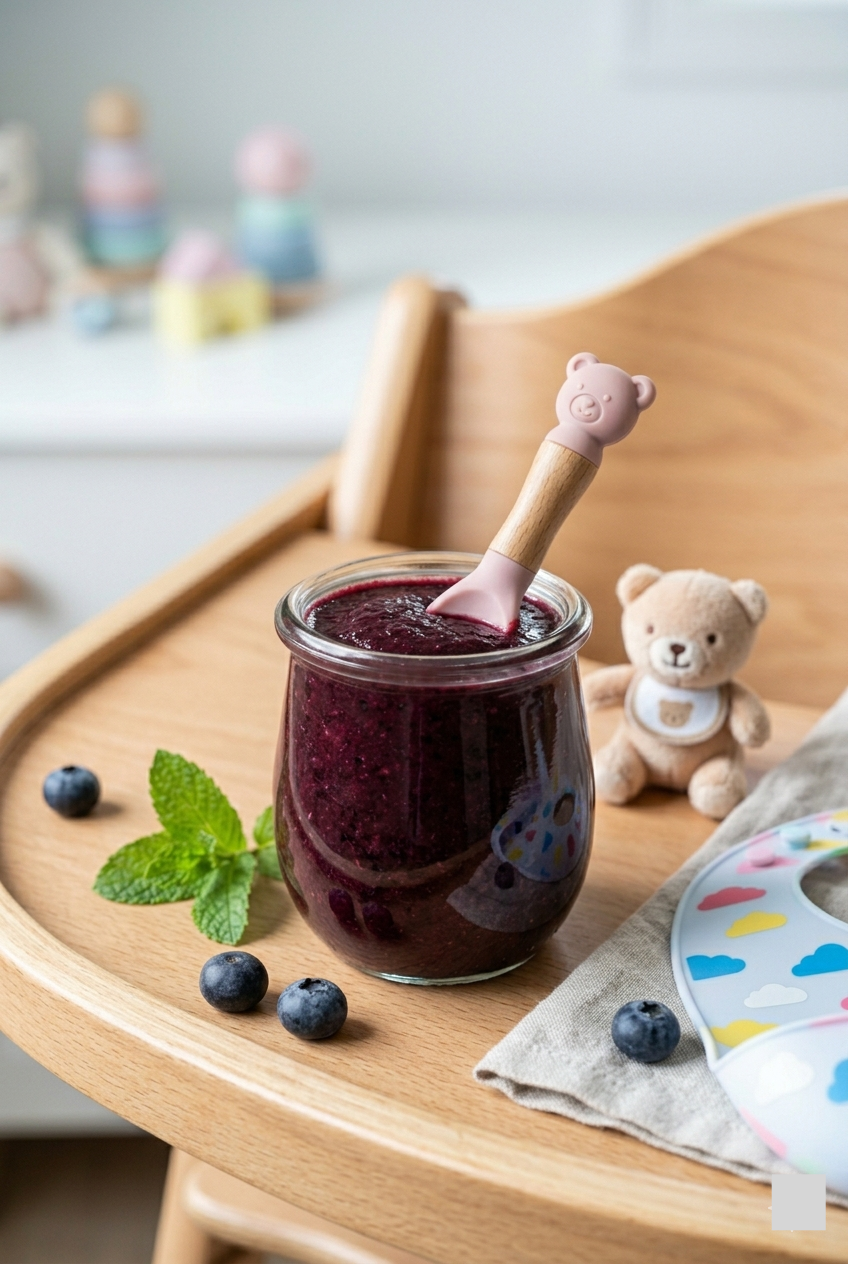
Blueberry Puree for Baby
🫐 Brain Development · Immunity · 6 Months+Blueberries are one of nature’s most powerful superfoods — packed with antioxidants, vitamin C, vitamin K and compounds that actively support brain development in growing babies. This blueberry puree for baby has a beautiful deep purple colour that babies find fascinating, and the naturally sweet flavour is genuinely delicious. One of the most nutritious fruit purees for babies you can make.
🛒 Ingredients
- 1 cup fresh or frozen blueberries
- Water if needed
🧰 Equipment Needed
- Small saucepan
- Blender
- Fine mesh strainer
- Silicone freezer tray
👩🍳 Step-by-Step Instructions
- Steam or lightly simmer: blueberries for 3–5 minutes until soft and skins begin to burst.
- Blend: thoroughly until completely smooth.
- Strain: through a fine mesh sieve for younger babies to remove skins.
- Cool and serve: or freeze in portions for up to 3 months.
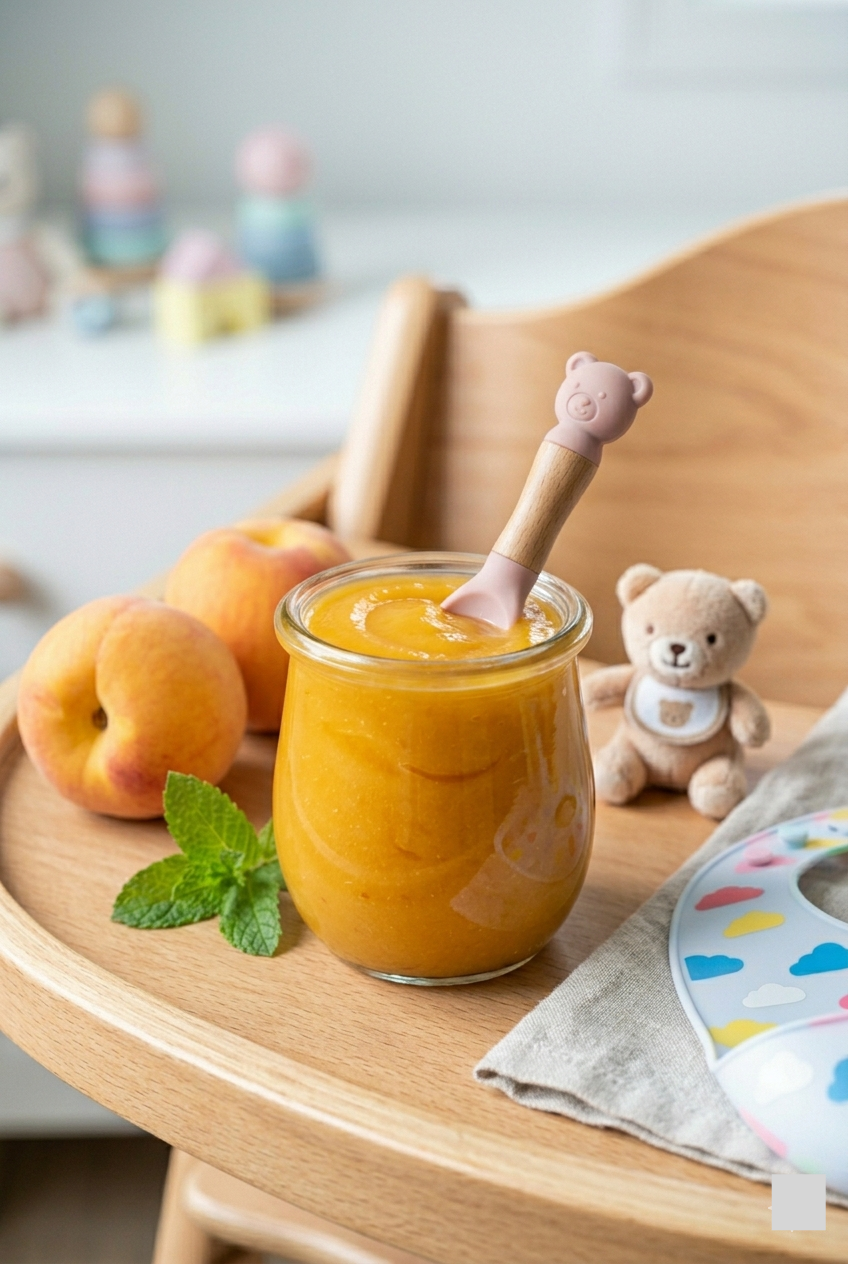
Peach Puree for Baby
🍑 Summer · Digestion · 6 Months+Peach puree has a naturally silky texture that babies often enjoy from the very first spoonful — there is something about the flavour that just works immediately. Peaches are rich in vitamin C, vitamin A and beta-carotene, and the gentle natural sweetness is just right for introducing fruit purees. This is one of the most consistently accepted baby food purees you will make, especially in summer when peaches are perfectly ripe.
🛒 Ingredients
- 2 ripe peaches
- Water as needed
🧰 Equipment Needed
- Peeler and knife
- Steamer (optional)
- Blender
- Silicone freezer tray
👩🍳 Step-by-Step Instructions
- Peel peaches: Score an X on the bottom, blanch in boiling water 30 seconds, then slip skins off.
- Remove pit: and chop into chunks.
- Steam lightly: for 6–8 minutes if not fully ripe. Very ripe peaches can be blended raw.
- Blend: until silky smooth.
- Serve chilled: in summer or freeze for up to 3 months.
Broccoli Puree for Baby
🥦 Iron · Calcium · 6 Months+Broccoli puree can require a little patience — its stronger flavour means some babies take longer to warm to it. But the nutritional payoff makes every attempt worth it. Broccoli is one of the most nutrient-dense vegetables you can give your baby: packed with iron, calcium, vitamin C and folate. Do not give up if your baby rejects it at first — repeated exposure is the key with all vegetables.
🛒 Ingredients
- 1 cup broccoli florets
- Water as needed
🧰 Equipment Needed
- Steamer basket
- High-powered blender
- Fine mesh strainer
- Silicone freezer tray
👩🍳 Step-by-Step Instructions
- Wash and cut: broccoli into small florets.
- Steam: for 12–15 minutes until completely soft.
- Blend thoroughly: until as smooth as possible, adding water gradually.
- Strain: if any fibrous texture remains — especially important for younger babies.
- Freeze in portions: Blending with sweeter purees after freezing is a great strategy.
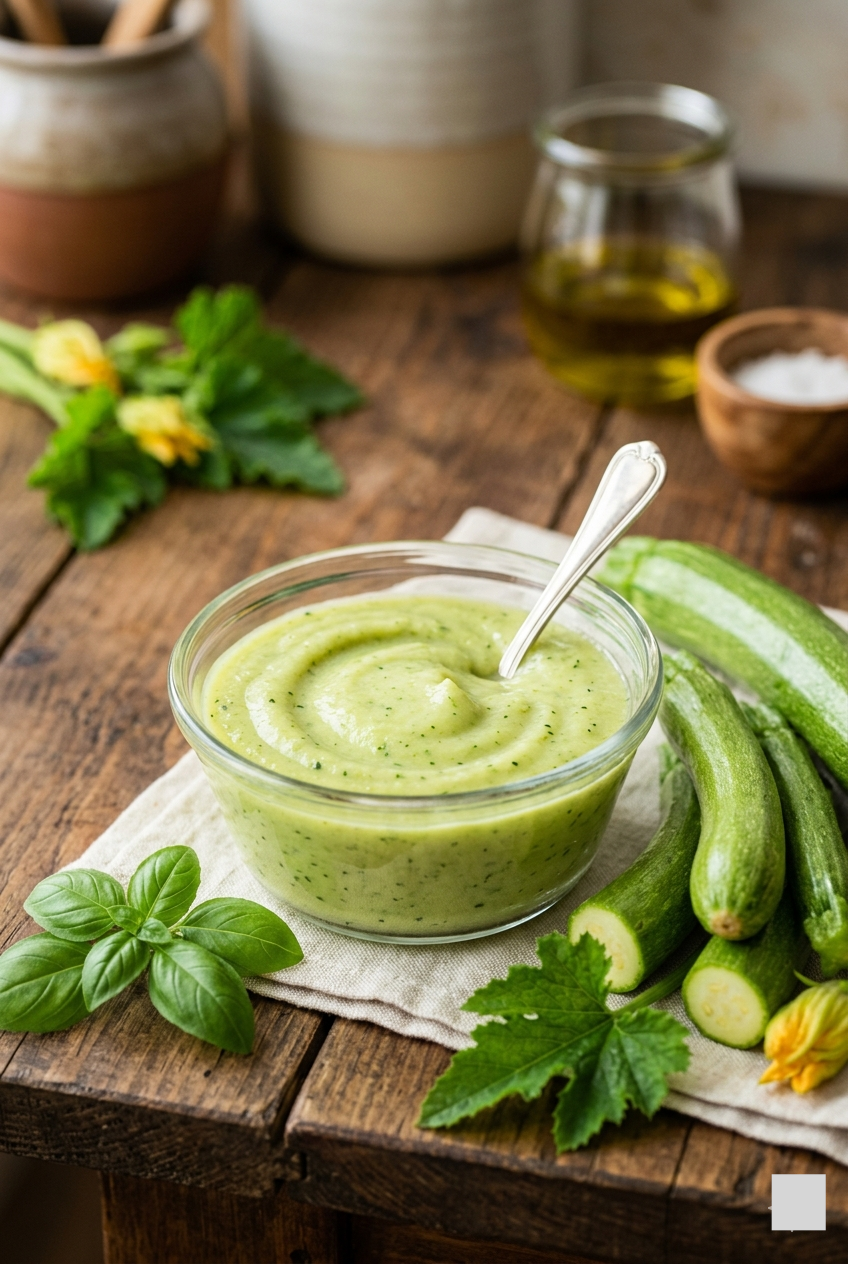
Zucchini Puree for Baby
🥒 Gentle & Tummy-Friendly · 6 Months+Zucchini is one of the most underrated vegetable purees for babies. Its mild flavour, soft texture and gentle nature on tiny digestive systems make it an ideal early vegetable to introduce. According to Google Trends, zucchini puree for baby is growing +20% in searches this week — parents are discovering this hidden gem. Rich in vitamin C, vitamin B6 and potassium, zucchini deserves a regular spot in your baby food rotation.
🛒 Ingredients
- 1 medium zucchini
- Water as needed
🧰 Equipment Needed
- Peeler and knife
- Steamer basket
- Blender
- Silicone freezer tray
👩🍳 Step-by-Step Instructions
- Wash, peel and chop: zucchini into even chunks.
- Steam: for 8–10 minutes until completely tender.
- Blend: until smooth, adding water to reach the right consistency.
- Cool before serving: Freeze extras in portions immediately.
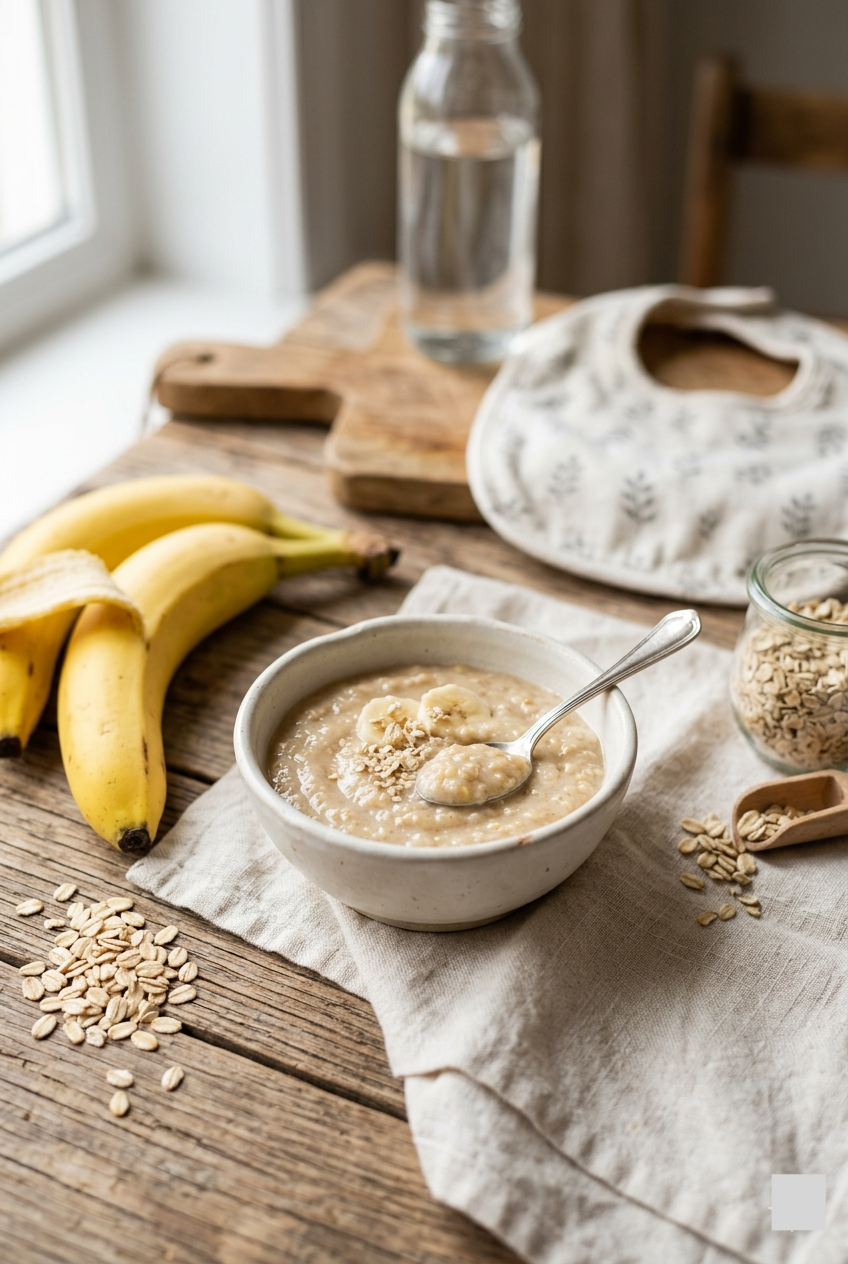
Oatmeal Banana Puree for Baby
🥣 Breakfast · Filling · 6 Months+This became our absolute favourite breakfast puree during busy mornings. The combination of oats and banana creates a perfectly balanced meal — slow-release carbohydrates from the oats keep babies full for longer, while the banana provides natural sweetness and potassium. It is warm, comforting, filling and one of the most satisfying baby purees in this entire guide.
🛒 Ingredients
- ¼ cup rolled oats
- 1 ripe banana
- Formula, breastmilk, or water
🧰 Equipment Needed
- Small saucepan
- Fork or blender
- Mixing bowl
👩🍳 Step-by-Step Instructions
- Cook oats: with liquid according to package directions until completely soft and creamy.
- Mash banana: separately in a small bowl until completely smooth.
- Mix together: the cooked oatmeal and mashed banana until fully combined and creamy.
- Thin with extra liquid: if needed for a smoother consistency for younger babies.
- Serve warm: This is best served fresh rather than frozen.
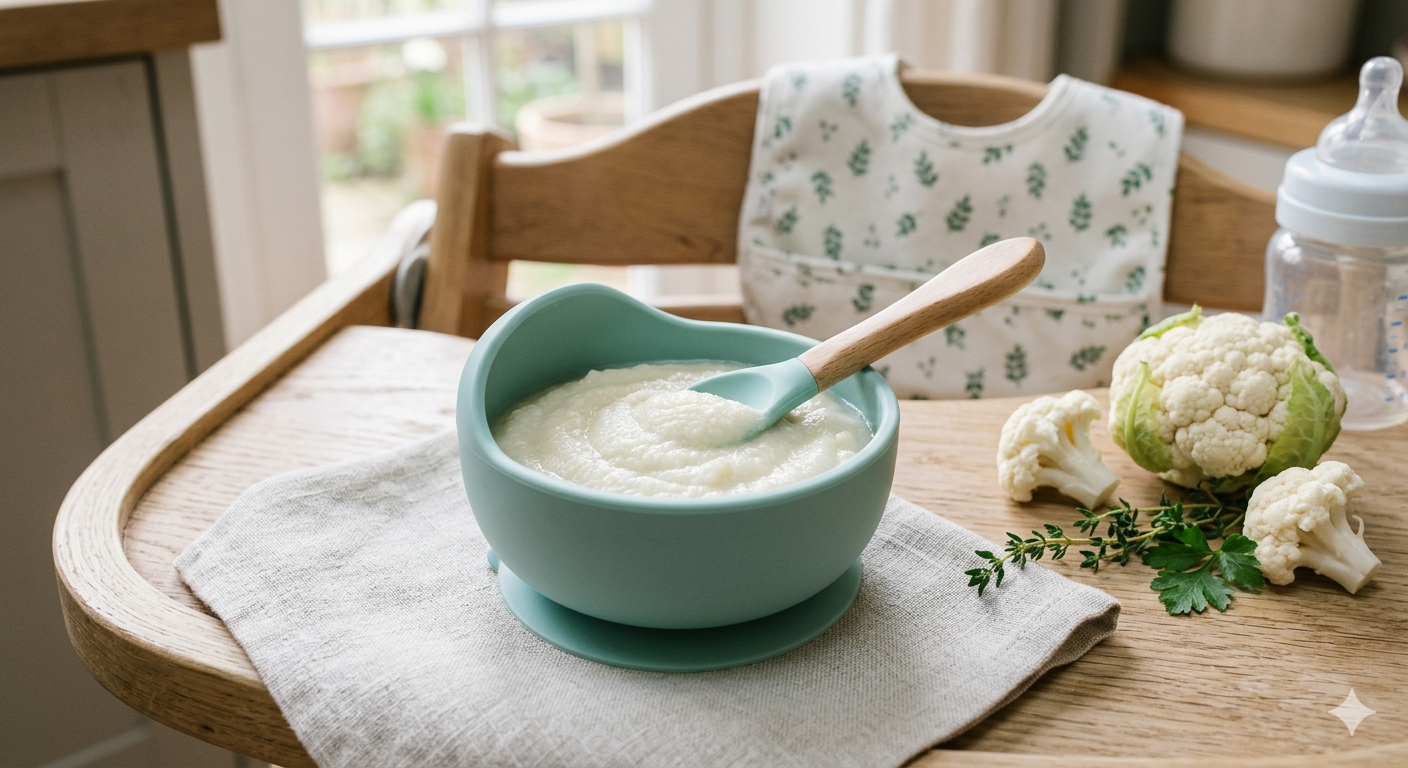
Cauliflower Puree for Baby
🥬 Mild Veggie Intro · Vitamins · 6 Months+Cauliflower becomes surprisingly, almost magically creamy once properly steamed and blended — which makes it one of the more unexpectedly delightful baby vegetable purees. Its mild, neutral flavour makes it one of the easiest vegetables for babies to accept, and it blends beautifully with other purees. Packed with vitamin C, vitamin K and folate.
🛒 Ingredients
- 1 cup cauliflower florets
- Water as needed
🧰 Equipment Needed
- Steamer basket
- High-powered blender
- Silicone freezer tray
👩🍳 Step-by-Step Instructions
- Wash and cut: cauliflower into small florets.
- Steam: for 12–15 minutes until completely soft.
- Blend: until completely smooth and creamy, adding water gradually.
- Cool and serve: or freeze in portions for up to 3 months.
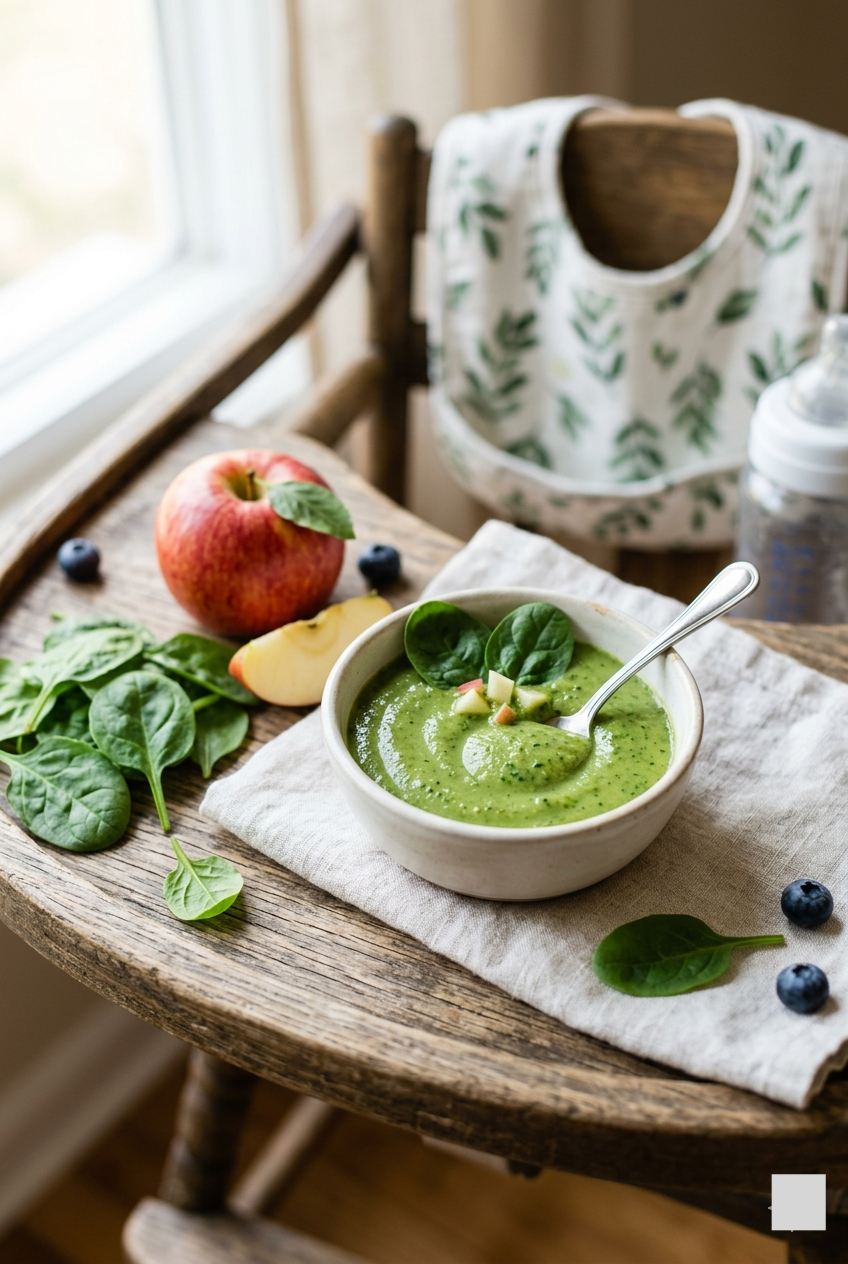
Spinach Apple Puree for Baby
🍃 Iron · Leafy Greens · 6 Months+This puree is one of the cleverest combinations in baby food. The natural sweetness of apple gently mellows the earthy bitterness of spinach, making leafy greens genuinely appealing to babies from the very start. Introducing spinach early through combinations like this helps babies develop a broader palate and accept green vegetables more readily as toddlers. Rich in iron, folate and vitamin K.
🛒 Ingredients
- 1 medium apple, peeled and chopped
- 1 cup fresh baby spinach
🧰 Equipment Needed
- Steamer basket
- High-powered blender
- Silicone freezer tray
👩🍳 Step-by-Step Instructions
- Steam apple pieces: for 8–10 minutes until soft.
- Add spinach: to the steamer for the last 2–3 minutes until wilted.
- Blend together: until completely smooth and vibrant green.
- Cool and serve: or freeze in portions immediately.
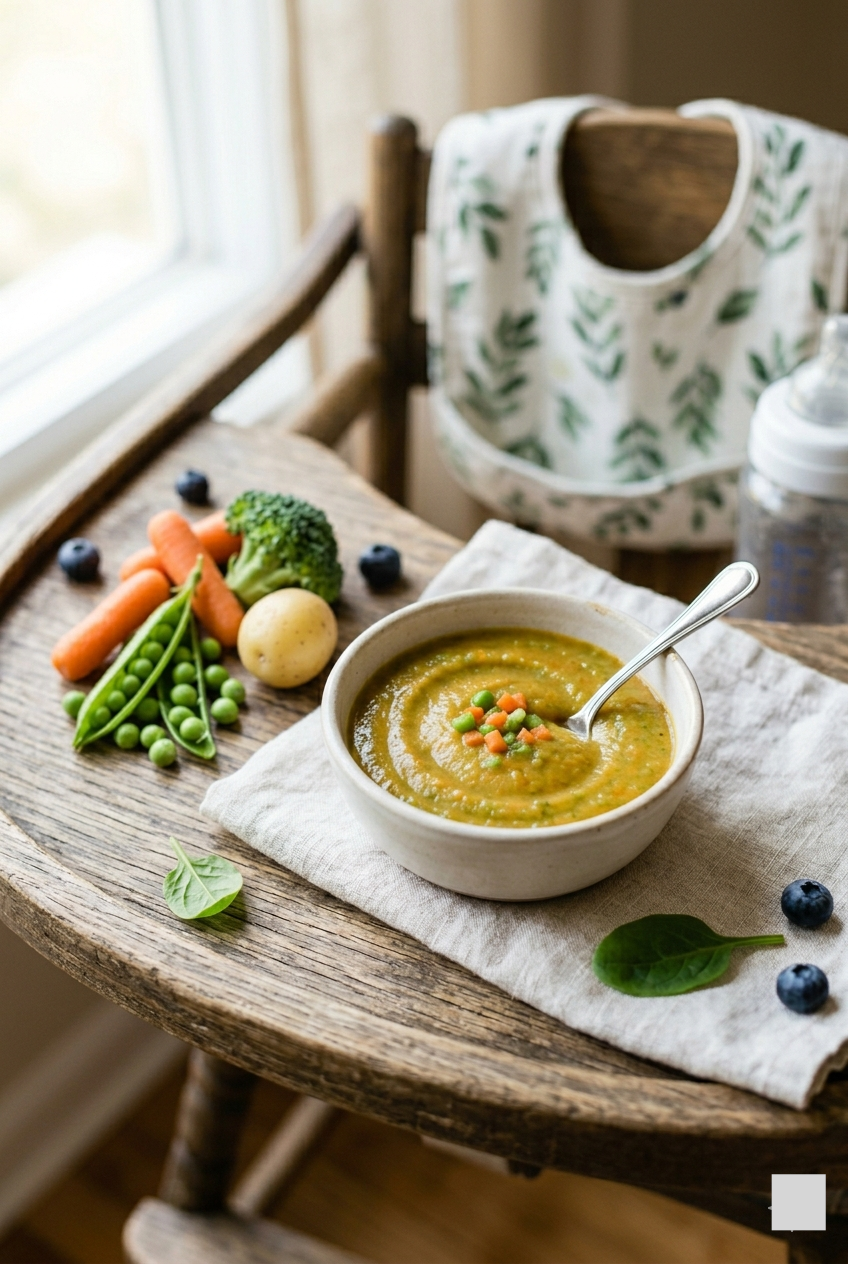
Mixed Veggie Baby Puree
🌈 Variety · Advanced Stage · 7 Months+Once your baby has successfully tried individual foods and shown no allergic reactions, mixed purees become one of the most exciting and nutritious options. This mixed vegetable baby puree combines carrots, peas and sweet potato into a vibrant, flavourful meal that introduces complex flavours and multiple nutrients in one serving. It is also brilliant for using up leftover steamed vegetables.
🛒 Ingredients
- ½ cup chopped carrots
- ½ cup frozen peas
- ½ cup cubed sweet potato
- Water as needed
🧰 Equipment Needed
- Large steamer basket
- High-powered blender
- Silicone freezer tray
👩🍳 Step-by-Step Instructions
- Important: Only make this once your baby has already tried each vegetable individually with no reaction.
- Steam all vegetables together: for 18–20 minutes until everything is completely soft.
- Blend together: until completely smooth and creamy, adding water gradually.
- Cool and portion: into silicone freezer trays immediately.
- Freeze: for up to 3 months.
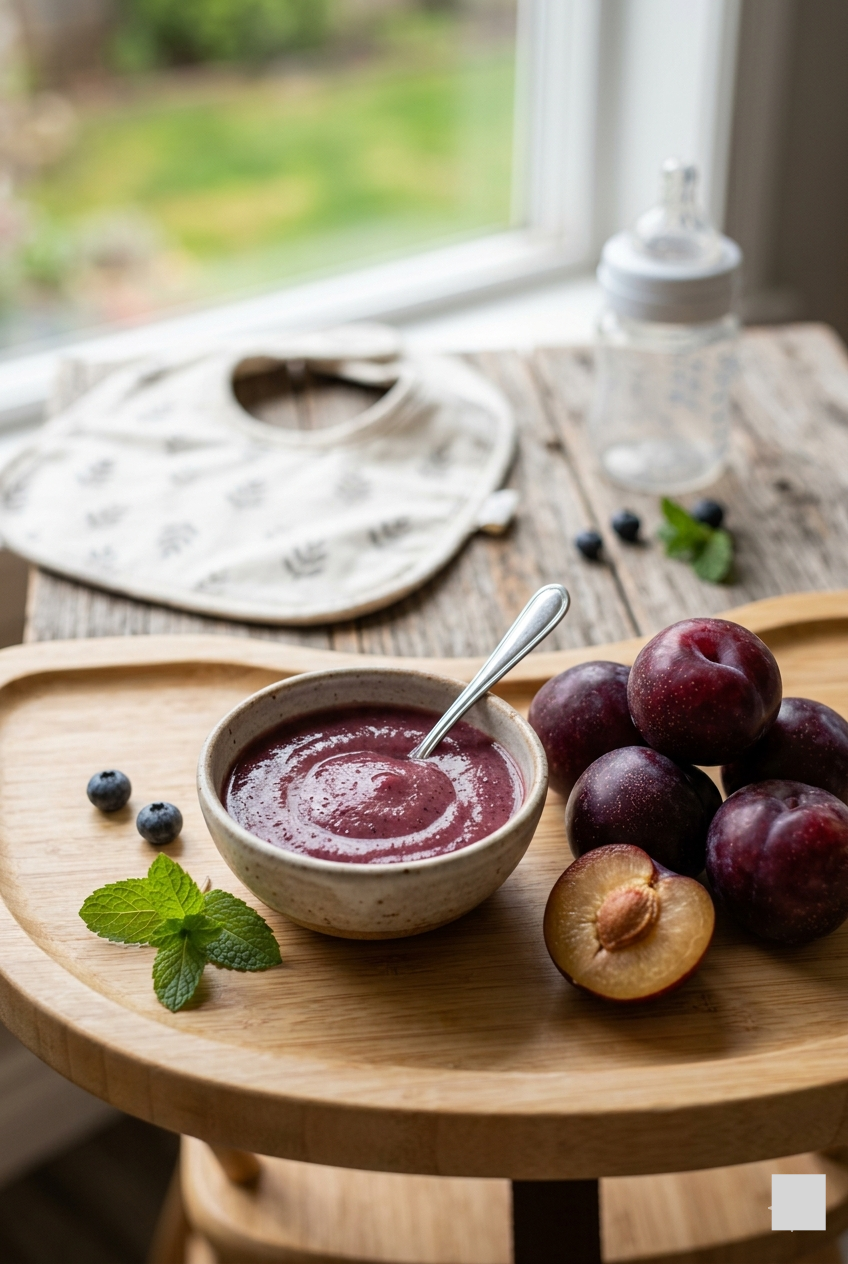
Plum Puree for Baby
🍑 Constipation Relief · 6 Months+Searches for plum puree for baby have exploded by 300% this week — and it is easy to see why. Plums are naturally sweet, packed with vitamin C, potassium and fibre, and contain sorbitol — the same natural compound in pears that helps gently relieve baby constipation. This makes plum puree a brilliant alternative to prune puree for babies who are a little bunged up. The colour is gorgeous, the flavour is mild and sweet, and most babies love it immediately.
🛒 Ingredients
- 4 ripe plums
- Water as needed
🧰 Equipment Needed
- Peeler and knife
- Steamer basket
- Blender
- Fine mesh strainer
- Silicone freezer tray
👩🍳 Step-by-Step Instructions
- Wash plums: thoroughly. Score an X on the bottom and blanch in boiling water for 30 seconds to slip skins off easily.
- Remove pit: and chop flesh into chunks.
- Steam lightly: for 8–10 minutes. Very ripe plums may need minimal steaming.
- Blend: until completely smooth.
- Strain: through a fine mesh strainer to remove any remaining skin pieces.
- Cool and serve: or freeze in portions for up to 3 months.
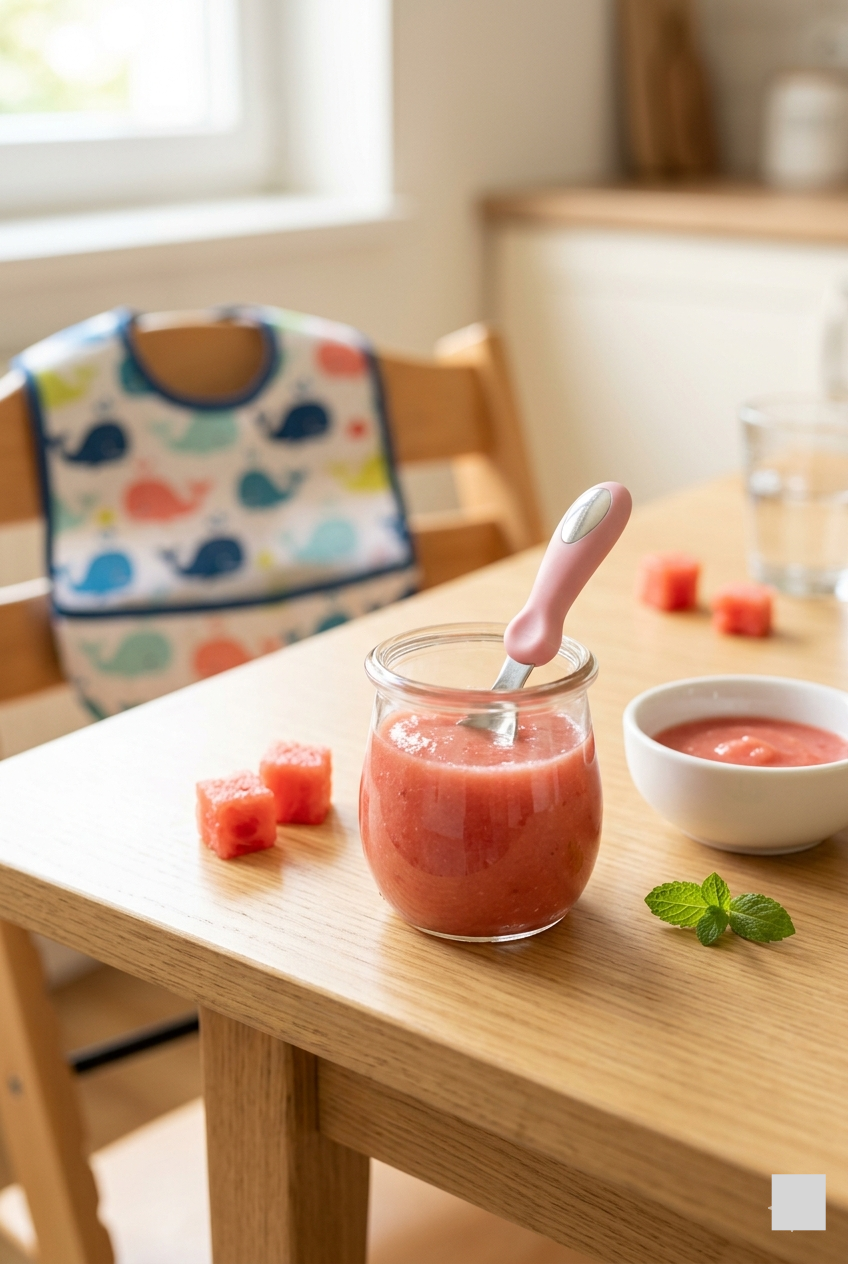
Watermelon Puree for Baby
🍉 Summer · Hydrating · 6 Months+Searches for watermelon puree for baby are up 90% this week — summer is here and parents are looking for refreshing, hydrating options. Watermelon is 92% water, making it one of the most hydrating first foods you can offer. It is also a natural source of lycopene — a powerful antioxidant linked to immune health. The naturally sweet flavour is almost universally accepted by babies, and it takes under 3 minutes to prepare.
🛒 Ingredients
- 2 cups seedless watermelon flesh
- Water if needed
🧰 Equipment Needed
- Knife and cutting board
- Blender or fork
- Fine mesh strainer
👩🍳 Step-by-Step Instructions
- Remove seeds: completely — even in seedless watermelon, check carefully.
- Cut flesh: into chunks and place in blender.
- Blend: until completely smooth. No water needed — watermelon is naturally very liquid.
- Strain: through a fine mesh strainer to ensure completely smooth texture.
- Serve chilled: Do not freeze — watermelon becomes watery and unpleasant when thawed. Always serve fresh.
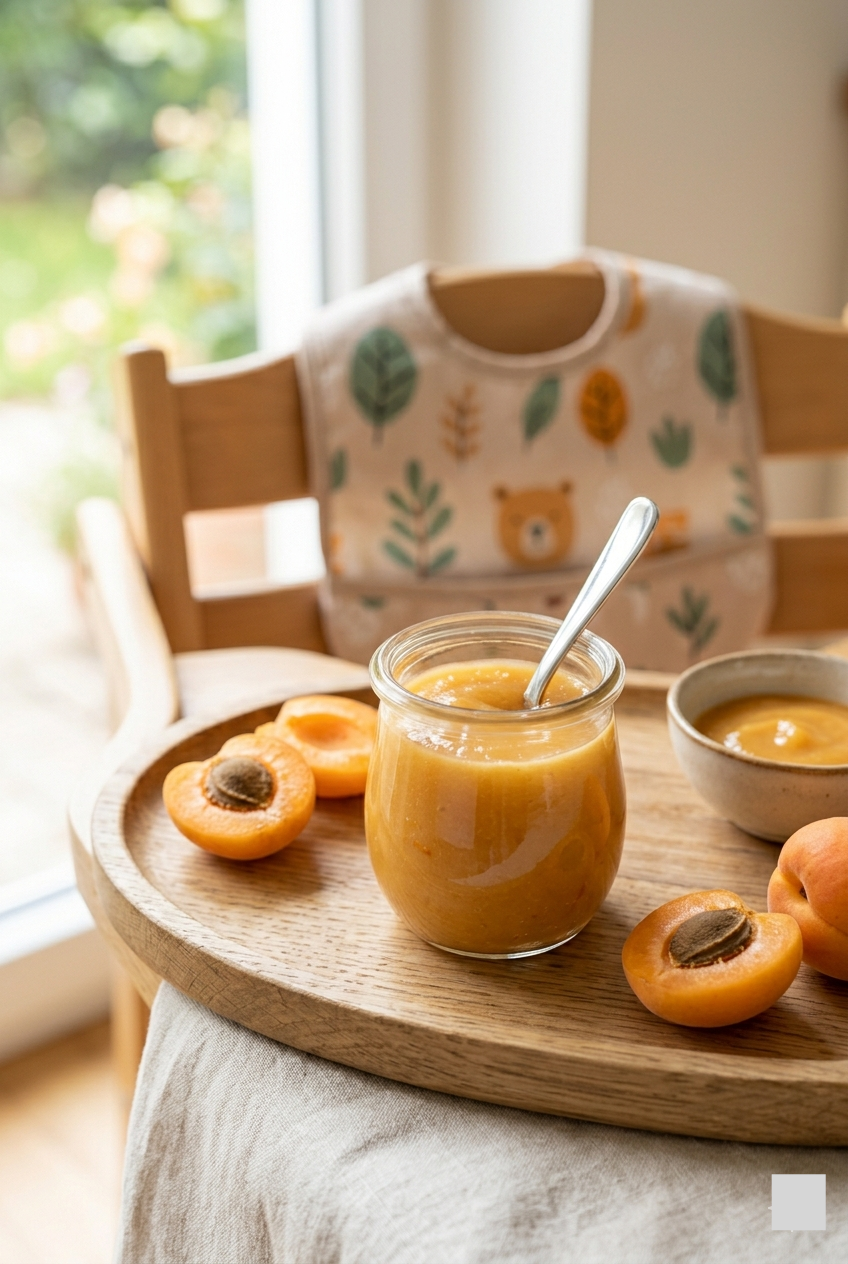
Apricot Puree for Baby
🍊 Vitamin A · Constipation · 6 Months+Searches for apricot puree baby are rising 70% this week — and this is one of the most nutritionally impressive fruit purees you can make. Fresh or dried apricots are extraordinarily rich in beta-carotene and vitamin A, with more than almost any other fruit. They also contain sorbitol for gentle constipation relief, iron and potassium. The warm orange colour is gorgeous and the sweet-tart flavour is one that most babies genuinely love.
🛒 Ingredients
- 6 fresh ripe apricots (or 8 dried apricots, soaked overnight)
- Water as needed
🧰 Equipment Needed
- Peeler and knife
- Steamer basket
- Blender
- Fine mesh strainer
- Silicone freezer tray
👩🍳 Step-by-Step Instructions
- Prepare apricots: Wash fresh apricots, cut in half, remove pit. For dried: soak overnight in water.
- Steam fresh apricots: for 8–10 minutes until completely soft. (Soaked dried apricots do not need steaming.)
- Blend: until completely smooth, using soaking water for dried apricots as your liquid.
- Strain: through a fine mesh strainer to ensure silky smooth texture.
- Cool and serve: or freeze in portions for up to 3 months.
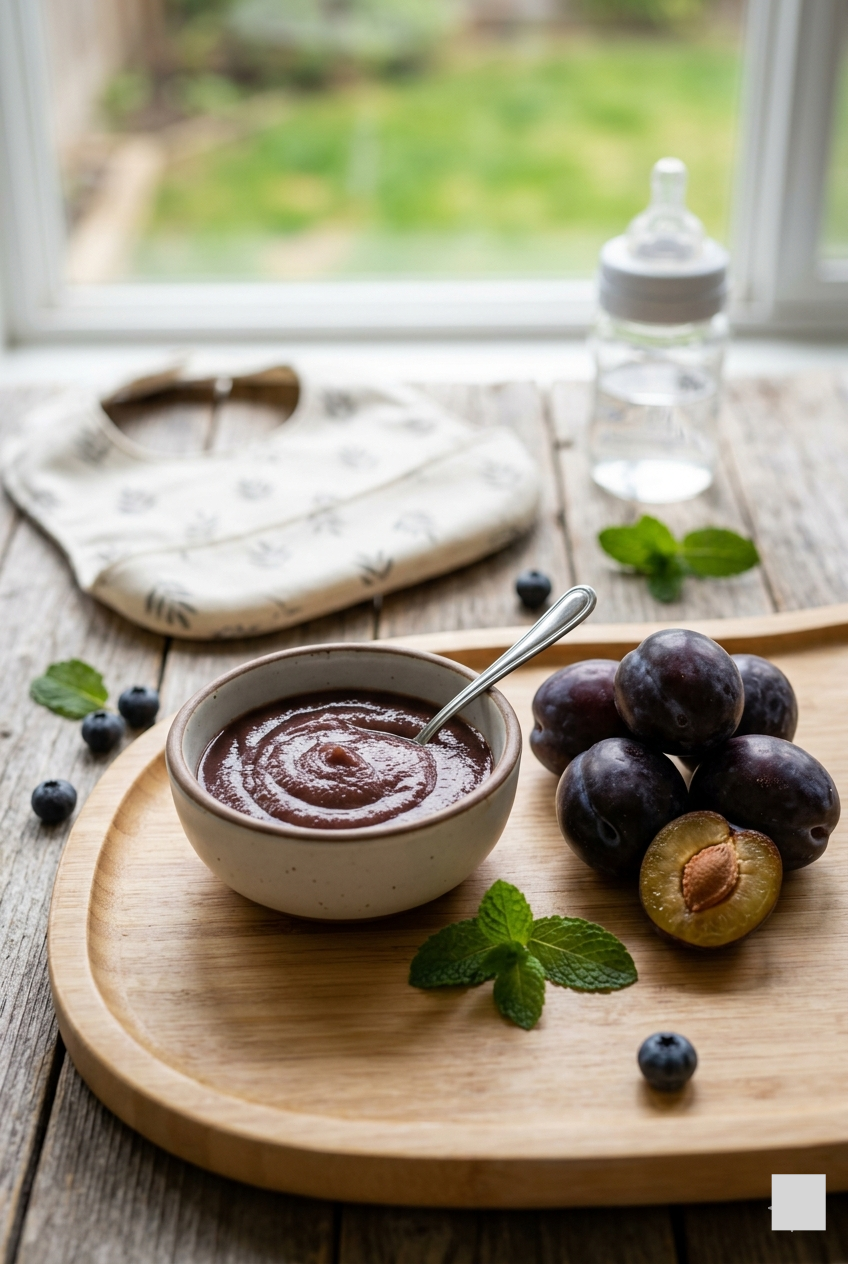
Prune Puree for Baby
💜 Constipation Relief · Digestive Health · 6 Months+Searches for prune puree for baby have risen 30% this week — and it is one of the most recommended remedies by paediatricians for baby constipation. Prunes contain high levels of sorbitol and fibre, making them one of the most effective natural solutions for keeping baby’s digestion moving comfortably. The sweet, rich flavour also makes prune puree surprisingly popular with babies. A true medicine-cabinet staple in puree form.
🛒 Ingredients
- 1 cup dried prunes (pitted)
- 2 cups water (for soaking and cooking)
🧰 Equipment Needed
- Small saucepan
- Blender
- Fine mesh strainer
- Silicone freezer tray
👩🍳 Step-by-Step Instructions
- Soak prunes: in 2 cups of water for at least 4 hours or overnight.
- Simmer: prunes in their soaking water for 10 minutes until very soft.
- Blend: prunes with their cooking liquid until completely smooth.
- Strain: through a fine mesh strainer for a silky smooth texture.
- Cool and serve: or freeze in small portions. A little goes a long way — start with 1–2 teaspoons.
🔗 Planning ahead for toddler stage? Once baby graduates from purees, our 4-week toddler meal plan and 10 easy toddler meals are waiting for you!
🏆 My Top Tips for Making Homemade Baby Food
Batch Cook and Freeze
Steam and blend large batches then freeze in silicone trays. Thaw only what you need — saves enormous time on the busiest days.
Introduce One Food at a Time
Wait 3–5 days between each new food to identify any allergic reactions. Keep a simple log of what your baby has tried.
Never Add Salt or Sugar
Babies’ kidneys cannot process salt and added sugar affects developing taste preferences. Let natural flavours shine.
Keep Offering Rejected Foods
Babies often need 10–15 exposures before accepting a new food. Never give up after just one or two tries — persistence without pressure is key.
Serve at the Right Temperature
Most purees should be served warm or at room temperature. Always test on your wrist first — never microwave in plastic.
Label Everything in the Freezer
Write the food name and date on every freezer bag. Most purees last 3 months — but you will never remember without the label.
Steam Rather Than Boil
Steaming preserves significantly more vitamins and minerals than boiling. Use a steamer basket over a pot of simmering water.
Keep Mealtimes Positive
Never force or pressure a baby to eat. Positive, low-pressure mealtimes build a healthy relationship with food that lasts a lifetime.
How to Store and Reheat Homemade Baby Purees
Homemade baby food becomes so much more manageable once you embrace batch cooking. Silicone freezer trays transformed our starting solids experience — I could thaw exactly one or two portions without any waste at all.
Refrigerator
Store in airtight glass containers. Keep away from raw meat and always use a clean spoon to avoid bacteria.
2–3 DaysFreezer
Freeze flat in silicone trays then transfer frozen cubes to labelled zip-lock bags. Thaw in the fridge overnight or in warm water.
Up to 3 MonthsReheating
Thaw overnight in fridge or in warm water. Heat gently in a small pan — never microwave in plastic. Always stir and test temperature before serving.
Serve Warm❓ Frequently Asked Questions About Baby Purees
What is the best first puree for babies?
The best first purees for babies are single-ingredient, mild and easy to digest. Top choices include sweet potato puree, carrot puree, pear puree, banana puree and avocado puree. These are naturally sweet, gentle on digestion and almost universally well accepted. Start with just one at a time and wait 3–5 days before introducing the next.
How much puree should I give a 4 month old?
For babies starting purees at 4 months, begin with just 1–2 teaspoons once a day. Gradually increase to 1–2 tablespoons over the following weeks as baby shows interest. Always follow your baby’s cues — if they turn away or close their mouth, they are full. Always consult your paediatrician before starting solids before 6 months.
Can you freeze homemade baby food purees?
Yes! Most homemade baby purees freeze beautifully for up to 3 months. Pour into silicone freezer trays, freeze solid, then transfer frozen cubes to clearly labelled freezer bags. Thaw in the fridge overnight or in a bowl of warm water. Note: watermelon and banana purees do NOT freeze well — always serve these fresh.
When can babies start purees?
Most babies begin purees around 6 months of age when they show signs of readiness: sitting with support, showing interest in food, and loss of the tongue-thrust reflex. Some paediatricians may recommend starting at 4 months in specific circumstances. Always consult your doctor before starting solids.
What if my baby rejects a puree?
Completely normal — and one of the most common concerns parents have! Babies often need 10–15 repeated exposures to a new food before accepting it. Keep offering without pressure, try pairing rejected flavours with familiar favourites, and never force-feed. What a baby rejects at 6 months may become a favourite at 8 months.
What is the difference between baby purees and baby led weaning?
Baby purees involve spoon-feeding smooth blended foods, typically starting around 4–6 months. Baby led weaning (BLW) skips purees and offers soft finger foods from around 6 months, letting babies self-feed. Many parents combine both approaches — called combination feeding — which works beautifully for most families.
How long do homemade baby purees last in the fridge?
Homemade baby purees last 2–3 days in the refrigerator when stored in airtight glass containers. Always use a fresh, clean spoon each time — never put a used spoon back into stored puree as saliva introduces bacteria that can spoil the food faster.
Which baby purees help with constipation?
The best baby purees for constipation are prune puree, pear puree, plum puree and apricot puree — all contain sorbitol, a natural sugar that gently draws water into the bowel and helps relieve constipation safely. Start with just 1–2 teaspoons and increase gradually. Always consult your paediatrician for persistent constipation.
🔗 More from ParentsGram: 5-ingredient toddler dinners · healthy toddler muffin recipes · 2-minute healthy snack guide
A Final Word From Me to You 💛
Starting solids felt emotional in ways I never fully expected. I stressed over every spoonful, Googled constantly, and wondered daily whether I was doing enough. Some days my baby barely touched the puree. Other days he wanted seconds of everything. Both felt overwhelming in completely different ways.
Over time, I realised that feeding babies is not about perfection. It is about patience, consistency, and creating positive, low-pressure experiences around food. The messy bibs, the funny first-taste reactions, the tiny spoons and food-covered high chairs — those chaotic moments eventually become the memories you will treasure most.
So if your baby refuses broccoli puree today or throws pea puree across the room tomorrow — you are not failing. You are learning together. Keep offering. Keep showing up. Give yourself grace during this season. You are doing an amazing job. 💛
Save This for Later! 📌
Pin this guide so you always have all 24 baby puree recipes to hand — and share with a parent who is just starting their solids journey!
↑ Back to Recipe #1