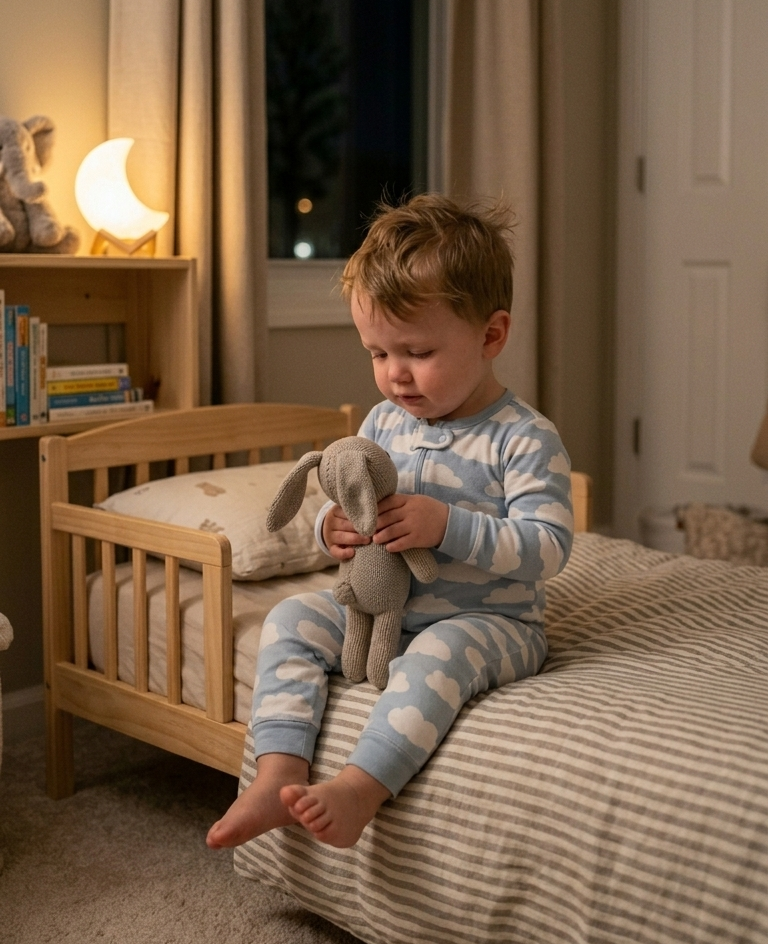
You’re running on four hours of broken sleep. You haven’t had a hot meal in three days. And you’re frantically Googling “why is my 18 month old suddenly not sleeping” with one thumb while bouncing him with the other arm.
That was me. That was my household for about three weeks straight when my son hit 18 months.
If you’re in it right now — I want you to know something first, before anything else: you are not doing anything wrong. Your child is not broken. Your sleep training hasn’t failed. This is the 18 month sleep regression, and it is one of the most intense and least talked-about sleep disruptions in toddlerhood.
What Is the 18 Month Sleep Regression?
A sleep regression is when a child who was previously sleeping well suddenly starts waking more frequently at night, resisting naps, or fighting bedtime — with no obvious cause like illness or a change in environment.
The 18 month regression is widely considered one of the hardest, and for good reason. Unlike earlier regressions that are mostly driven by physical development, this one hits at a perfect storm of:
- A massive developmental leap in cognitive and language skills
- A surge of independence — your toddler has opinions now (loud ones)
- Separation anxiety coming back with a vengeance
- Molars starting to come in, which are notoriously painful
- The transition from two naps to one, if you haven’t made that switch yet
All of this lands at the same time, right around 18 months. It’s a lot for a small person. And when small people are overwhelmed, they don’t sleep.
Signs Your Toddler Is Going Through the 18 Month Sleep Regression
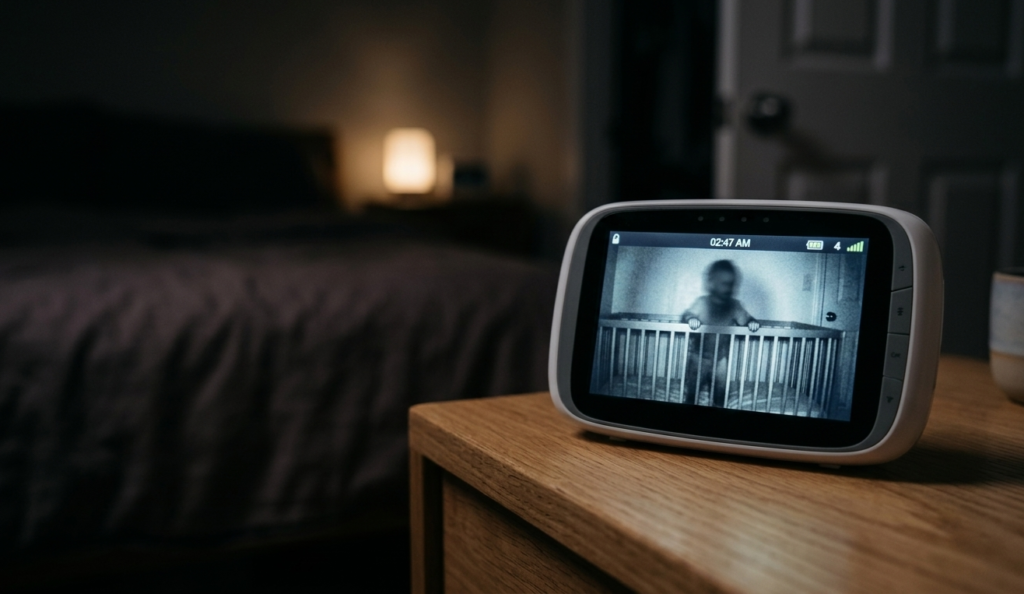
The tricky thing about this regression is that it can look different for every child. But here are the most common signs:
- Waking multiple times after previously sleeping through
- Taking much longer to fall asleep at bedtime
- Crying or calling out when they wake — even after being resettled
- Refusing to be put down in the crib at all
- Nap resistance out of nowhere
- Shorter naps than usual, or refusing to nap at all
- Clingier and crankier than their baseline
- More tantrums — especially around sleep times
The dead giveaway: If your child was sleeping beautifully, and then suddenly, seemingly overnight, stopped — and nothing obvious in their environment has changed — it’s almost certainly the regression.
How Long Does the 18 Month Sleep Regression Last?
This is always the first question, and I completely understand why. When you’re in survival mode, you just need to know there’s an end date.
The honest answer: typically 2 to 6 weeks.
For some children it’s shorter. For others, particularly if there are molars coming through or a language leap happening at the same time, it can stretch a bit longer. But the key thing to know is that it does end. This is a phase, not a new permanent reality, even though it feels very permanent at 2am.
What can make it drag on longer: inconsistent routines, inadvertently creating new sleep associations (like feeding or rocking to sleep every time they wake), or underlying discomfort from teething that isn’t being addressed.
What Actually Causes It?
Their Brain Is Doing Something Extraordinary
At 18 months, toddlers undergo one of the biggest cognitive leaps of early childhood. Language is exploding. They’re starting to understand cause and effect. They’re forming memories. They’re beginning to understand that they are a separate person from you — which is thrilling and terrifying in equal measure. All of this neurological activity makes sleep harder.
They’ve Discovered They Have Opinions
At 18 months, the word “no” enters their vocabulary with real conviction. Bedtime becomes a power struggle not because your toddler is manipulative, but because they’re practicing autonomy for the first time. They don’t want to stop. They don’t want to be separated from you. And now they have just enough language to make that very clear, at volume.
Separation Anxiety Comes Back
Many parents assume separation anxiety peaks in early infancy and then fades. It does fade — and then it comes back around 18 months, often stronger. Your toddler now understands object permanence but hasn’t yet fully grasped that you’ll always come back. That gap in understanding is what makes bedtime feel, to them, like a genuine loss.
Those Molars Are No Joke
First molars typically emerge anywhere between 13 and 19 months, and they are the most painful teeth in the whole teething process. The surface area is huge, and they don’t cut through as cleanly as front teeth. If your toddler is also drooling more, chewing on everything, and particularly fussy around mealtimes — teething is almost certainly a factor.
What To Do: 8 Things That Actually Help
There is no magic fix — but these are the things that genuinely helped us get through, and that sleep professionals consistently recommend.
At 18 months, your toddler’s entire sense of security comes from predictability. A consistent bedtime routine is an anchor. Bath → pyjamas → one book → song → crib. Same order. Every night. Around the same time. Even on weekends.
White noise is not a sleep crutch. It’s a genuinely effective tool that helps your toddler fall asleep faster and masks external sounds between sleep cycles. The key is that it runs all night, not just until your child falls asleep.
Light is one of the most underestimated factors in toddler sleep. Even a streetlight filtering through thin curtains can disrupt melatonin. Look for curtains specifically labelled 100% blackout rather than “room darkening” — they’re very different.
Sleep sacks provide a consistent sleep cue — the feeling of being zipped in signals sleep time — and the light compression can be genuinely soothing for toddlers who are overtired and overstimulated. The regression period is not the time to introduce a blanket.
Overtired toddlers sleep worse, not better. Elevated cortisol actively fights sleep and causes more night waking. During a regression, try shifting bedtime 20 to 30 minutes earlier than usual. It feels backwards. Do it anyway.
Before you assume every night waking is purely behavioral, check those back gums. A teething toddler who needs pain relief will not respond to any sleep training technique. Give appropriate pain relief before bed per your pediatrician’s guidance.
The goal is to offer comfort without creating a new dependency. Go in, reassure them, keep the lights low, use a calm voice, avoid turning on screens. Then try to resettle them in the crib. If you start feeding to sleep every night, you’ll have to address that on top of the regression later.
Toddlers who feel securely connected to their parent during waking hours show less separation anxiety at bedtime. Give your 18 month old more intentional one-on-one time during the day — real face-to-face play, reading together, following their lead. A “full cup” during the day translates to a child who is less desperate for connection when the lights go out.
What NOT to Do During the 18 Month Sleep Regression
Common mistakes that make things worse
- Don’t drop the nap yet. At 18 months, almost all children still need one nap. Dropping it too early leads to serious overtiredness.
- Don’t assume it’s permanent. In the thick of it, it feels like this is just who your child is now. It isn’t. Sleep regressions end.
- Don’t go in every time they make a noise. Some toddlers will grumble and resettle themselves if given 5 to 10 minutes. Going in immediately can wake them more fully.
- Don’t skip the bedtime routine because they seem too tired. The more tired and dysregulated they are, the more they need the calming structure of a routine.
- Don’t give up on the crib. Adding a toddler bed transition on top of everything else will make things significantly harder.
A Note on Sleep Training During a Regression
If your child already has solid sleep skills and was sleeping well before — wait it out. Give it 2 to 3 weeks of consistent routine and things should improve on their own.
If your child never really established independent sleep and has always relied on being fed or rocked to sleep — the regression might actually be a good time to make a change, because you’re going to be dealing with night waking regardless. But I’d always recommend doing this with guidance from a paediatric sleep consultant rather than going it alone in an exhausted state.
🛒 Products That Actually Helped Us Survive Sleep Regression
| Product | Why It Helps | Link |
|---|---|---|
| Hatch Rest Baby Sound Machine | White noise + sleep trainer + night light in one | Amazon ↗ |
| Toddler Sleep Sack (18M+) | Consistent sleep cue, light compression, keeps them warm | Amazon ↗ |
| Blackout Curtains | Blocks all light for deeper, longer sleep | Amazon ↗ |
| Weighted Sleep Sack | Extra calming compression for overtired, overstimulated toddlers | Amazon ↗ |
❓ Frequently Asked Questions
You are not failing. Your child is not broken. You are both going through something genuinely hard, and the fact that you’re up at 2am searching for answers means you are exactly the kind of parent your child needs.
Hold the routine. Ride it out. Accept help when it’s offered. Sleep when you can.
There is an other side to this — and you’ve got this.
Affiliate Disclaimer: This post may contain affiliate links. This means I may earn a small commission at no extra cost to you if you make a purchase through my links. I only recommend products I genuinely love and believe will be helpful for you. Thank you for supporting my blog!